
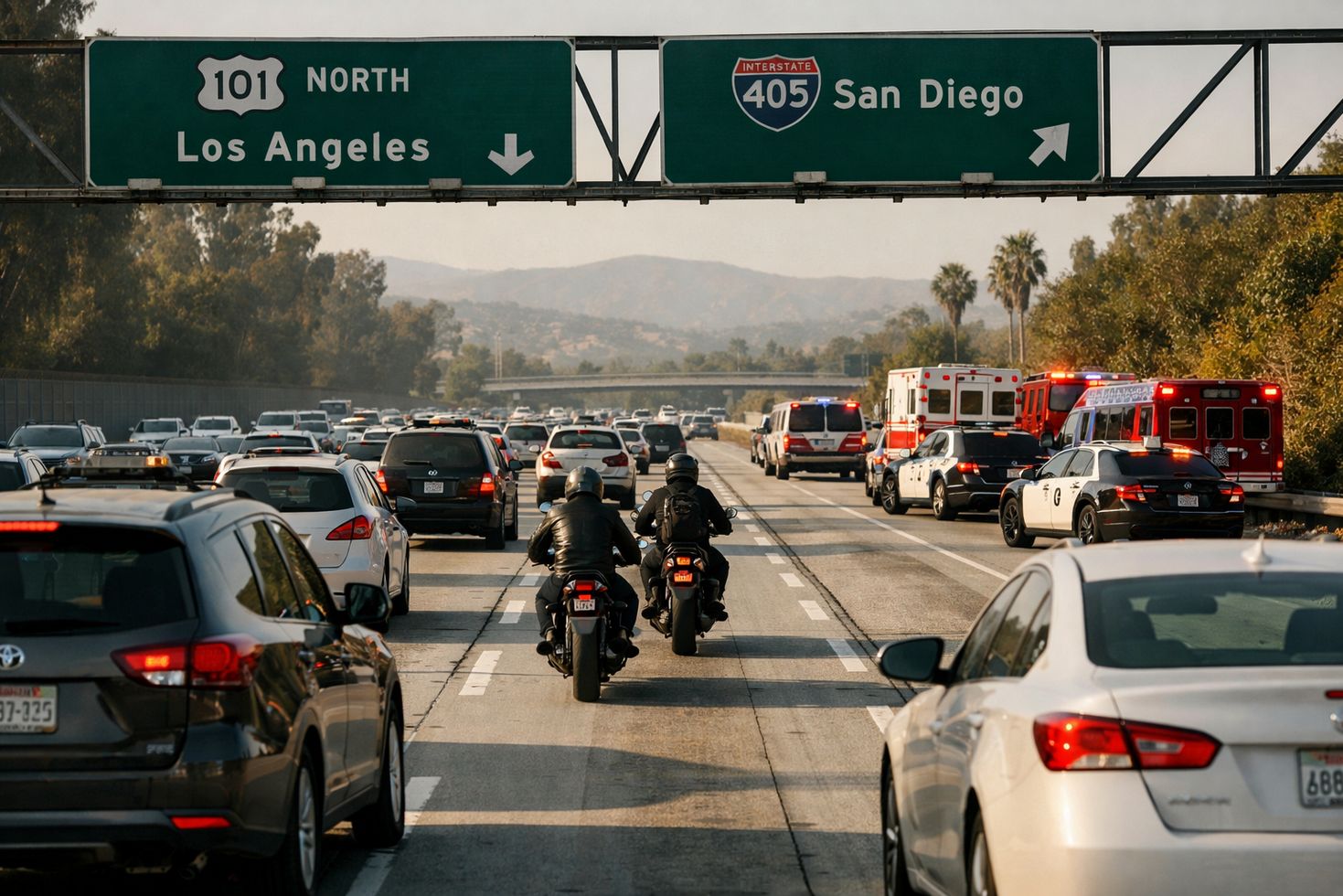
Yes, lane splitting is legal in California for motorcycles. That direct answer matters, but it does not mean every lane splitting maneuver is safe, reasonable, or lawful in every traffic condition. California riders should understand both the legal rule and the practical expectations that apply on the road, especially because official guidance has evolved over time. If a crash happens, fault is not decided by legality alone. Instead, insurers, courts, and investigators may look at the specific facts, including speed, spacing, traffic flow, visibility, and whether each person acted reasonably under the circumstances. This guide explains the rule, the safety considerations riders should keep in mind, and how comparative negligence can affect fault after a lane splitting collision.
What Lane Splitting Means Under California Law
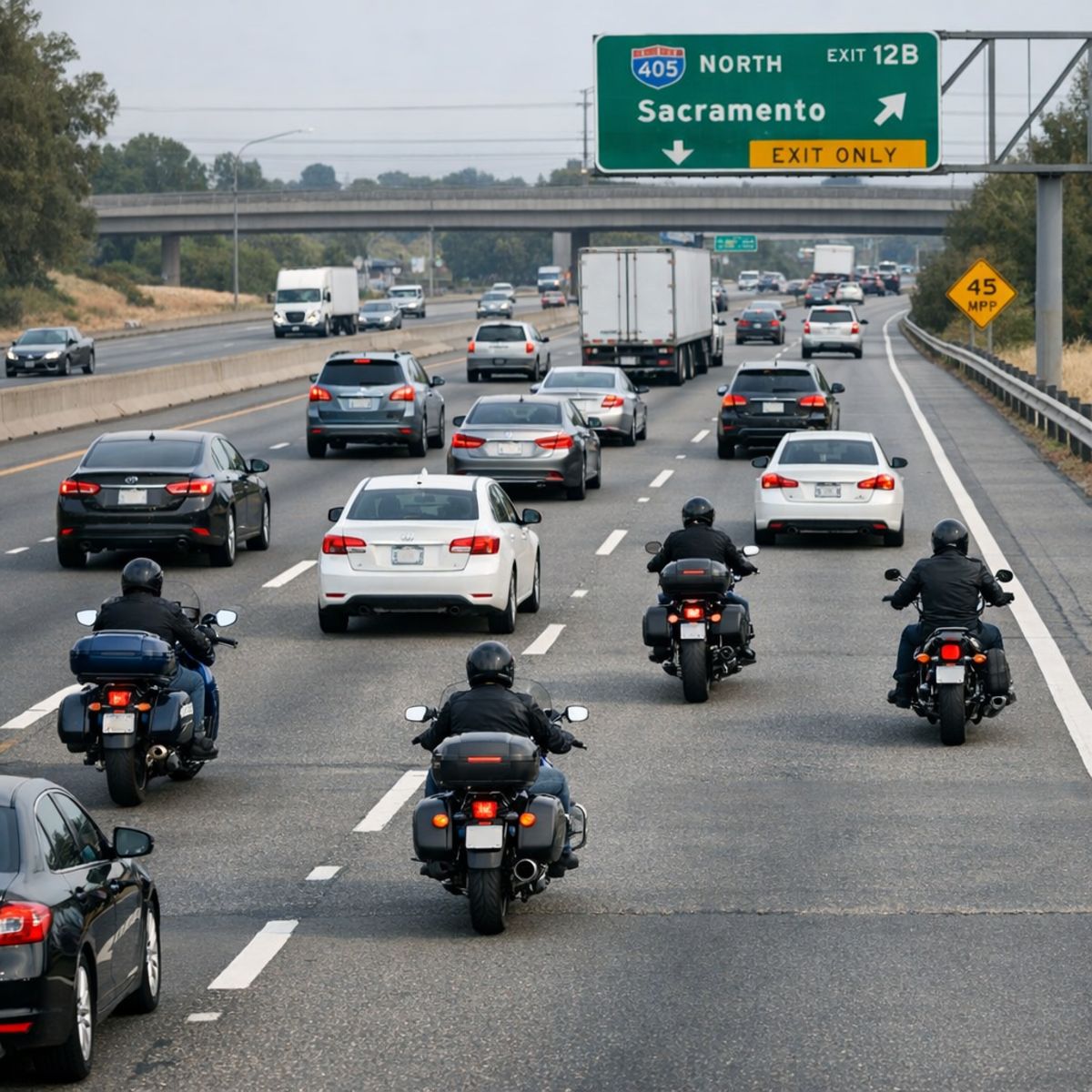
In plain language, lane splitting means a motorcycle rides between rows of stopped or moving vehicles traveling in the same direction, usually between marked lanes. When people search for lane splitting California rules, this is the basic idea they need to understand first. It does not mean riding on the shoulder, and it is not the same as two motorcycles sharing a single lane side by side.
California is well known for recognizing motorcycle lane splitting. Vehicle Code 21658.1 addresses the practice and confirms that state agencies may develop and share safety guidance about it. In practical terms, the law treats lane splitting as a recognized riding practice, while questions about whether a rider acted safely still depend on the specific facts of a crash or traffic stop.
How the statute describes lane splitting
A simple way to understand vehicle code 21658.1 is that it defines lane splitting as riding a motorcycle between rows of vehicles in the same lane. The statute also allows public safety authorities to issue educational guidance for riders and drivers. That matters because motorcycle lane splitting is recognized in California, but safe speed, traffic flow, visibility, and surrounding driver behavior can still affect whether a rider’s actions were reasonable.
Lane splitting, lane filtering, and lane sharing
These terms are often mixed up. Lane splitting usually refers to moving between lanes of traffic when cars are stopped or still moving. Lane filtering is often used to describe a rider moving through slow or stopped traffic to the front at a light, though people use the term differently. Lane sharing usually means two motorcycles traveling side by side in one lane. Shoulder riding is different from all of these because it involves using the shoulder rather than the space between travel lanes.
If you are comparing California motorcycle rules more broadly, it may also help to review California motorcycle helmet law requirements.
Rules and Practical Limits Riders Should Know
Lane splitting rules are often evaluated through the details of how the maneuver occurred, not simply whether a motorcycle traveled between lanes. In practice, legality and fault can turn on whether the rider's actions appeared reasonable under the surrounding conditions. Official guidance has generally focused on safer circumstances for lane splitting, rather than creating an absolute checklist that guarantees a maneuver was lawful in every case.
That practical context matters after a collision. Investigators, insurers, and attorneys may look at traffic flow, speed differences, visibility, lane width, weather, road surface, and the behavior of nearby drivers. For broader California motorcycle accident lawyer guidance, these facts are often central to how a claim is analyzed.
Traffic speed and speed differences
One of the most important issues is the relationship between the motorcycle's speed and the speed of surrounding traffic. A small speed difference in slow or stopped traffic may be viewed differently than a much faster pass through moving lanes. This is not a strict legal formula, but it is a common factor in deciding whether lane splitting was performed in a reasonably safe way.
Road width, visibility, and surrounding vehicles
Narrow lanes, faded markings, poor pavement, rain, glare, and limited sight lines can all make the same maneuver more hazardous. Large trucks and buses may create blind spots or reduce available space. Even where lane splitting may be generally permitted, these roadway conditions can make a maneuver riskier and potentially harder to defend as reasonable after a crash.
Situations that can increase risk
Risk often increases near ramps, intersections, merging traffic, and areas where drivers may change lanes suddenly. Those conditions do not automatically make lane splitting unlawful, but they can complicate fault analysis. In many cases, the key question is whether the rider's conduct matched the realities of traffic, visibility, and roadway conditions at that moment.
How Fault May Be Analyzed After a Lane Splitting Crash
When a collision involves lane splitting, the analysis usually does not begin and end with that single fact. In California, lane splitting accident fault is generally evaluated by looking at the full sequence of events, the surrounding conditions, and whether each road user acted with reasonable care under the circumstances. The outcome often depends on evidence and context, not a single rule.
Step 1, reconstruct the traffic movements
A common starting point is identifying what each vehicle was doing just before impact. Review may focus on whether traffic was stopped, slowing, or moving steadily, where the motorcycle was positioned between lanes, and whether a driver was changing lanes, turning, braking, or opening space unexpectedly. Statements from the people involved, photos, video, and vehicle damage patterns can all help build a clearer timeline.
Step 2, review conditions and visibility
The next step often involves the roadway itself. Lighting, weather, lane width, congestion, speed differences, and sight lines may all affect how the event is understood. Investigators and insurers may also consider whether mirrors, blind spots, traffic density, or road markings limited what a driver or rider could reasonably see and react to in time.
Step 3, compare conduct to reasonable care
Fault analysis then usually turns to conduct. All road users are expected to use reasonable care. In a lane splitting case, that can mean examining speed, spacing, signaling, lane changes, attention to surrounding traffic, and whether decisions matched the conditions at that moment. Lane splitting itself is one fact in the larger picture, rather than an automatic answer on fault.
Step 4, consider shared fault rules
California also follows comparative fault principles, which means responsibility may be shared when the evidence shows more than one party contributed to the crash. A general overview of this concept can be found in comparative negligence in California explained. In practice, that means the final assessment may reflect multiple actions and conditions, rather than placing all blame on one person from the start.

Common Misunderstandings About Lane Splitting and Fault
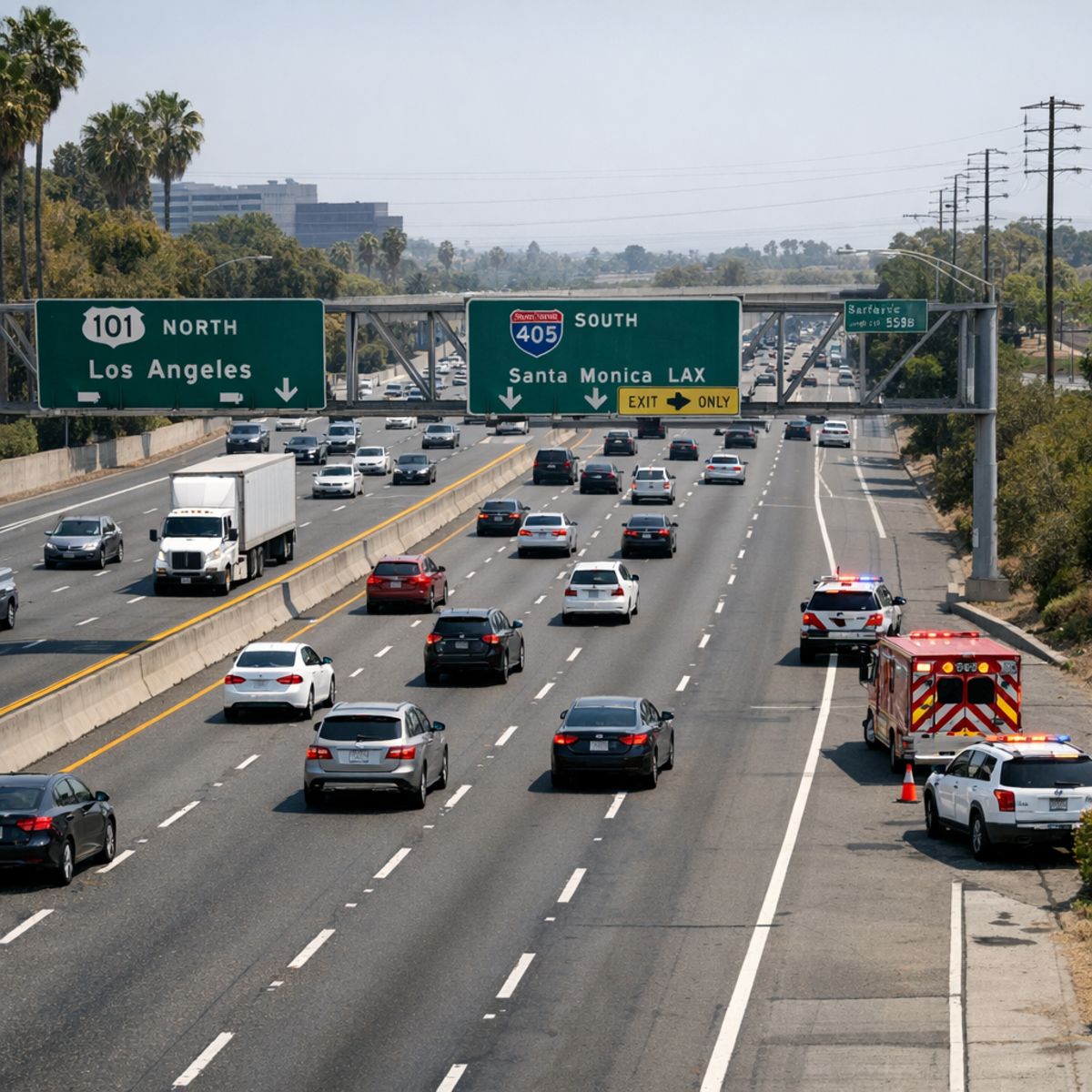
Public discussions often blur two separate questions: whether lane splitting is legally permitted, and whether it was done with reasonable care in a specific situation. Those are not the same thing. In a motorcycle accident claim information in California, fault is usually based on evidence, road conditions, traffic movement, visibility, speed, and the actions of everyone involved.
Legal does not mean automatically fault free
A common myth is that if lane splitting is allowed, the rider cannot be blamed. The fact is simpler. A lawful action can still be carried out in an unsafe or unreasonable way. For example, investigators may look at spacing, surrounding traffic, and whether the maneuver matched the conditions at that moment. Legal permission sets a baseline, but safe execution still matters.
A rider is not automatically at fault
The opposite myth is also misleading. A motorcyclist is not always responsible just because lane splitting was involved. Drivers may also be evaluated for lane changes, failure to check mirrors, sudden movement, or other conduct that contributed to the crash. Like many traffic cases, fault analysis is fact specific, much like how separate conduct issues can matter in other roadway cases involving truck driver hours of service rules.
The key comparison is this: legality answers whether the conduct may be allowed, while fault answers whether the conduct was reasonable and whether it caused harm. Those are related questions, but they are not interchangeable.
What Evidence Often Matters After a Lane Splitting Collision
In lane splitting collision claims and investigations, fault analysis often depends on several categories of evidence rather than a single detail. Common sources include police reports, scene photographs, witness accounts, video footage, and the physical condition and position of the vehicles involved. Together, these materials can help create a clearer picture of roadway movement, visibility, spacing, and timing.
Why early reports may not tell the full story
Early reports are sometimes based on limited information available at the scene. Dispatch details, initial observations, and brief summaries may be preliminary, and they are not always the final findings. As additional facts are reviewed, including photos, video, and witness statements, the overall understanding of how the collision occurred may change.
Common sources of evidence
Frequently reviewed evidence includes police documentation, photos showing lane markings, roadway layout, and vehicle positions, along with traffic camera footage, helmet camera footage, and statements from people who saw the event. Investigators may also look at vehicle damage patterns because impact points can sometimes support or challenge an early account of the crash.

Frequently Asked Questions
Is lane splitting legal in California for motorcycles?
Yes. In California, motorcycle lane splitting is legal, but riders still must use reasonable care based on traffic, speed, and roadway conditions.
What is Vehicle Code 21658.1?
Vehicle Code 21658.1 recognizes lane splitting in California law. It also supports educational guidance about safer lane splitting practices for motorcyclists and drivers.
Does lane splitting automatically make a rider at fault in a crash?
No. Fault is not automatic, it depends on the specific facts, the actions of everyone involved, and the available evidence.
Is lane splitting the same as riding on the shoulder?
No. Lane splitting generally means traveling between lanes of traffic, while riding on the shoulder involves using the area outside the marked traffic lanes.
Can fault be shared in a lane splitting accident?
Yes. California comparative negligence rules can apply when more than one person’s actions contributed to the collision.
Key Takeaways on Lane Splitting in California
Lane splitting is legal in California, but that does not mean every crash involving a motorcycle is simple to evaluate. Safety conditions, rider and driver behavior, road conditions, and the available evidence can all affect how fault is analyzed after a collision. In many cases, responsibility is fact specific and may be shared, depending on what happened in the moments before impact. If you want to discuss a motorcycle collision with the team, you can contact us.