
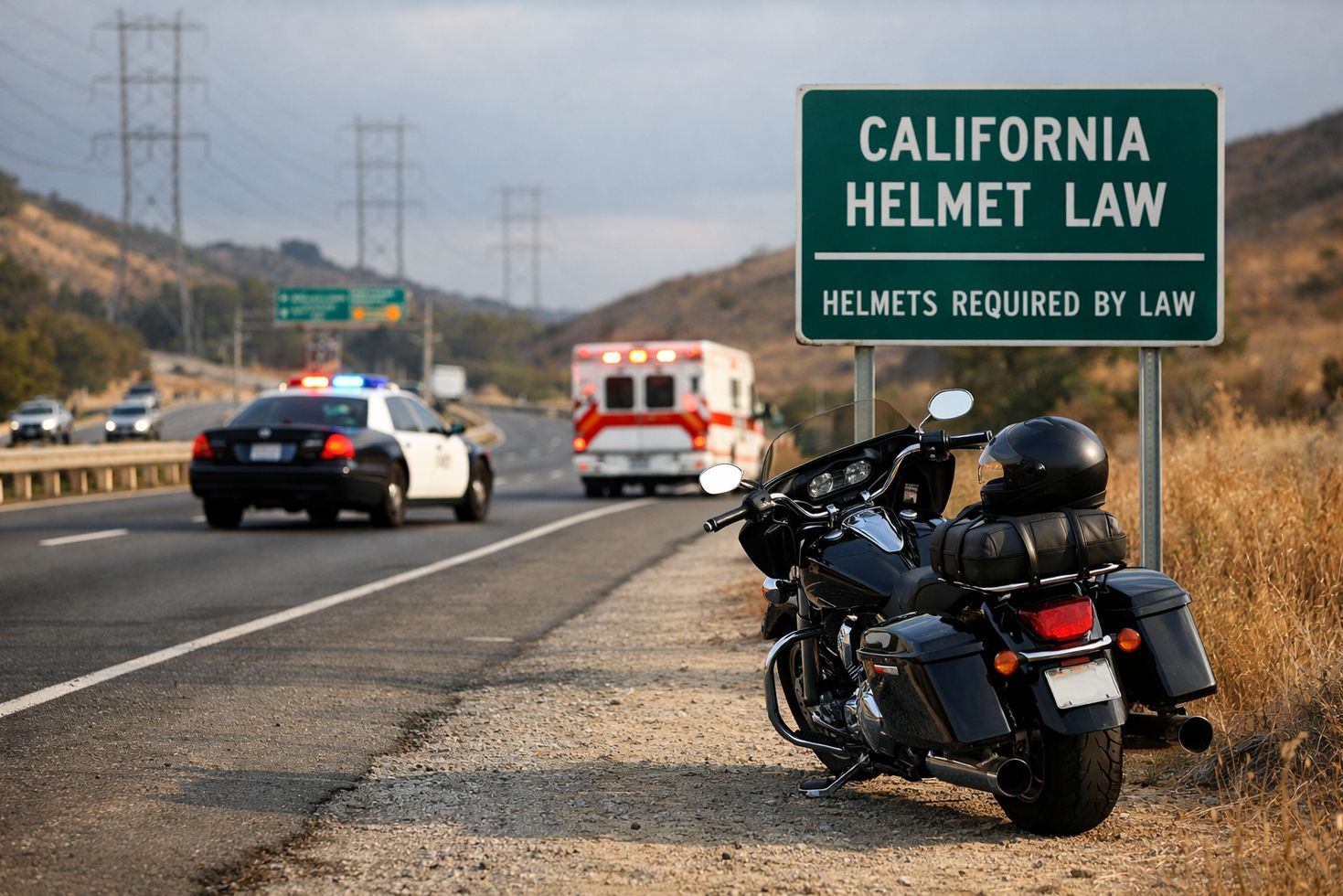
California motorcycle helmet rules require both riders and passengers to wear a helmet while on a motorcycle, motor-driven cycle, or motorized bicycle. In practical terms, California has a universal helmet law, and compliance matters for both safety and legal reasons. This article provides general information only, not case-specific legal advice.
Below, this guide explains the basic rule under Vehicle Code 27803, what makes a helmet compliant, and the practical points riders should understand about everyday use. It also addresses how helmet use may come up in a personal injury claim after a crash, while keeping that discussion general and fact-based.
The goal is to give a clear starting point: what California requires, how helmet compliance supports rider safety, and why these details can matter when injuries and insurance issues are being reviewed after an accident.
What California Law Requires
In plain English, Vehicle Code 27803 says that people on motorcycles in California must wear a helmet. This rule is the direct legal answer many readers are looking for when asking about the state’s motorcycle helmet law. It applies during operation and while riding on a motorcycle, so the requirement is not limited to just the person controlling the bike.
Vehicle Code 27803 Basics
California’s helmet rule is broad and straightforward. Under vehicle code 27803, a motorcycle rider must wear a safety helmet, and the same requirement extends to anyone riding as a passenger. The law focuses on wearing a helmet that complies with applicable safety standards, which means the helmet should be the type recognized for motorcycle use rather than a casual or non-protective head covering.
Who Must Wear a Helmet
Both operators and passengers are covered. If you are driving a motorcycle or riding on one, California law generally requires a safety-compliant helmet. That simple rule often becomes important after a crash, especially when fault and damages are disputed, which is why topics like comparative negligence in California explained may also matter in a broader injury claim context.
How to Check Whether a Helmet Meets California Requirements
When people talk about California motorcycle helmet requirements, the discussion usually starts with whether the helmet appears to be a dot approved helmet. That is a useful starting point, but it is not the only thing to review. A practical check includes the helmet’s labeling, how it fits, and whether it fastens securely when worn. Readers looking for broader legal context can also review the California motorcycle accident lawyer page.
Look for DOT Compliance Markings
A common first step is to check for DOT labeling on the helmet. In general consumer terms, that marking is often referenced as an indicator that the helmet is intended to meet federal safety standards for motorcycle use. It should be treated as part of the review, not the entire review.
Check Fit and Fastening
A helmet should sit securely and be worn with the retention system properly fastened. If it shifts easily, feels excessively loose, or is worn unfastened, that can raise questions about whether it is being used in a compliant way. Proper fit matters alongside labeling because a helmet that is not secured may not provide the intended protection.
Novelty Helmets Versus Compliant Helmets
Appearance alone is not enough. Some novelty helmets may resemble compliant motorcycle helmets but may not satisfy motorcycle helmet requirements. A low-profile design, decorative style, or casual marketing language does not confirm legal compliance.
- Check for DOT markings.
- Make sure the helmet fits securely.
- Confirm the chin strap or retention system fastens properly.
- Be cautious about novelty helmets that may not meet legal standards.
Why Helmet Use Can Matter in an Injury Claim
In a helmet use injury claim, helmet use may become part of the factual record after a crash, but it is usually only one issue among many. People often ask whether not wearing a helmet automatically decides a case. In general, claim discussions are more nuanced than that. The details can depend on the reported injuries, the available evidence, and how the incident is documented.
Helmet Use as Part of the Evidence
Helmet use may be discussed alongside police or incident reports, scene photographs, witness statements, and medical records. Those materials can help show what happened and what injuries were observed after the crash. In some situations, helmet use may be raised during the review of injury allegations, especially when the record includes head or facial trauma. That does not mean one fact alone controls the entire claim. Instead, it may be considered together with many other circumstances.
Injury Type and Claim Discussions
Questions about helmet use may come up more often when a person reports head, face, or possibly neck-related injuries. The reason is generally tied to how parties evaluate the nature and extent of the alleged harm, not because there is a single automatic outcome. Different injuries can lead to different arguments, and the significance of helmet use may vary depending on the facts. For a broader overview of related claim issues, see how injury lawyers help after a crash.
A careful review typically looks at the full picture rather than any one detail in isolation. That is why general information can be helpful, but the specific facts, records, and circumstances often shape how the discussion unfolds.

Helmet Law and Comparative Fault Questions
In California, questions about helmet use and questions about fault in an injury claim are related, but they are not the same issue. A traffic citation concerns enforcement of roadway rules, while a civil claim focuses on how an incident happened, what injuries were suffered, and whether different acts or conditions may have contributed to the damages being claimed. That distinction matters when people are trying to understand legal help for motorcycle accident claims.
A Citation Is Not the Same as a Civil Claim
Receiving a citation does not automatically decide a personal injury case, and the absence of a citation does not automatically resolve one either. Civil claim analysis is broader. It may involve reviewing roadway conduct, vehicle movement, injury evidence, and other rules that shape accident claim analysis. In other words, traffic compliance is one topic, while recoverable damages are another.
How Shared Fault May Be Discussed
Comparative fault is a general California framework used when more than one factor may have played a role in an injury event or in the extent of harm alleged. Depending on the facts, parties may discuss driver behavior, road conditions, visibility, speed, equipment, and other contributing issues. A helmet-related question may be one part of that conversation, but it is not the same as an automatic denial of a claim. The legal analysis remains fact-specific and separate from simply asking whether a traffic rule was followed.
Common Evidence Reviewed After a Motorcycle Crash
When helmet use becomes relevant after a motorcycle crash, several types of information may be reviewed as part of the claim evaluation process. This review is usually broader than a single document and may include reports, photographs, physical evidence, and medical records. The goal is generally to understand what was documented, when it was documented, and whether different sources are consistent with one another.
Reports, Photos, and Records
Common sources can include police or collision reports where applicable, though those early reports may be preliminary and later clarified. Review may also include scene photographs, images of the motorcycle, and the condition of any helmet or other gear. Medical documentation may be examined to see what injuries were recorded and when treatment began. In some matters, statements, insurance materials, or other records are also considered alongside broader vehicle accident claim support resources.
Why Documentation Matters
Documentation matters because consistent records can help clarify what safety equipment was reportedly used and what conditions were noted after the crash. Clear photos, preserved items, and timely medical records may reduce confusion when different accounts exist. This does not mean any one source automatically controls the outcome, but complete and organized documentation can help create a more accurate picture of the events being reviewed.
Common Misunderstandings About California Helmet Law
Questions about California helmet law often turn on a few repeated myths. A common misunderstanding is that only certain riders need helmets. In general, California requires motorcycle riders and passengers to wear helmets, so the idea of broad adult exemptions is inaccurate.
Myth: Some Adult Riders Are Exempt
This myth appears often in online discussions, but the rule is not optional for most adult riders. The safer approach is to assume helmet use is required unless a qualified attorney identifies a very specific legal issue in a particular case.
Myth: Any Helmet Meets the Law
Another misconception is that any hard-shell helmet counts. Style alone does not prove compliance. Whether a helmet satisfies legal requirements depends on whether it meets applicable standards, not simply on appearance or marketing language.
A final myth is that a helmet issue decides an injury case by itself. It can matter, but it is only one part of a broader legal analysis involving fault, causation, injuries, and damages. For broader car accident injury claim information, separate safety discussions from claim-specific legal advice.
Frequently Asked Questions
Does California require all motorcycle riders to wear a helmet?
Yes. California generally requires both motorcycle operators and passengers to wear a helmet while riding.
What is Vehicle Code 27803?
Vehicle Code 27803 is the California law that addresses motorcycle helmet requirements. It sets the basic rule that riders and passengers must wear compliant helmets.
What is considered a DOT approved helmet in California?
In general, a DOT-compliant helmet is one that meets federal safety standards and is worn properly with the fit and retention system secured. Riders should make sure the helmet is intended for motorcycle use.
Can helmet use affect a motorcycle injury claim?
It can be one factor in a claim, especially if the injuries involve the head, face, or related areas. The effect depends on the facts, the injuries involved, and the evidence in the case.
Does not wearing a helmet automatically prevent recovery?
No. A claim is usually evaluated based on multiple facts, not just one issue. Whether recovery may be affected depends on the specific circumstances and the connection between the injuries and helmet use.
Key Takeaways on California Motorcycle Helmet Law
In short, California motorcycle helmet law requires riders and passengers to wear a compliant safety helmet under Vehicle Code 27803. Understanding the basic fit and compliance concepts can help riders stay aligned with the rule, but questions about a collision or insurance claim usually depend on the full facts, including how the incident happened and what evidence is available.
Helmet use may come up in claim discussions, but it is only one part of a broader analysis. The specific injuries, the conduct of everyone involved, and the surrounding circumstances can all affect how a matter is evaluated.
If you would like general information about possible next steps, you can contact the team through the contact page.