
Shared fault can play a major role in a California injury claim, especially after a vehicle accident. In plain language, shared fault means more than one person or party may be responsible for what happened. California uses a pure comparative negligence rule, which means fault can be divided by percentage instead of treated as an all-or-nothing issue. That matters because an injured person may still have a claim even if they were partly at fault.
This overview explains the basic idea of comparative negligence in California and why it often comes up in accident cases. It also sets out what this article will cover, including key definitions, how fault may be calculated, what kinds of evidence can affect the analysis, and answers to common questions. The goal is to provide a clear, general explanation of the law and process, not case-specific legal advice or any promise about results.
What Comparative Negligence Means in California
Comparative negligence is a legal rule used when more than one person may share responsibility for an injury. In plain language, negligence means failing to use reasonable care under the circumstances. That can include actions like driving while distracted, ignoring traffic signals, or otherwise acting in a way that creates avoidable risk. In many injury claims, especially those involving traffic collisions and similar incidents, the facts may show that fault is not entirely on one side.
Negligence and Shared Responsibility
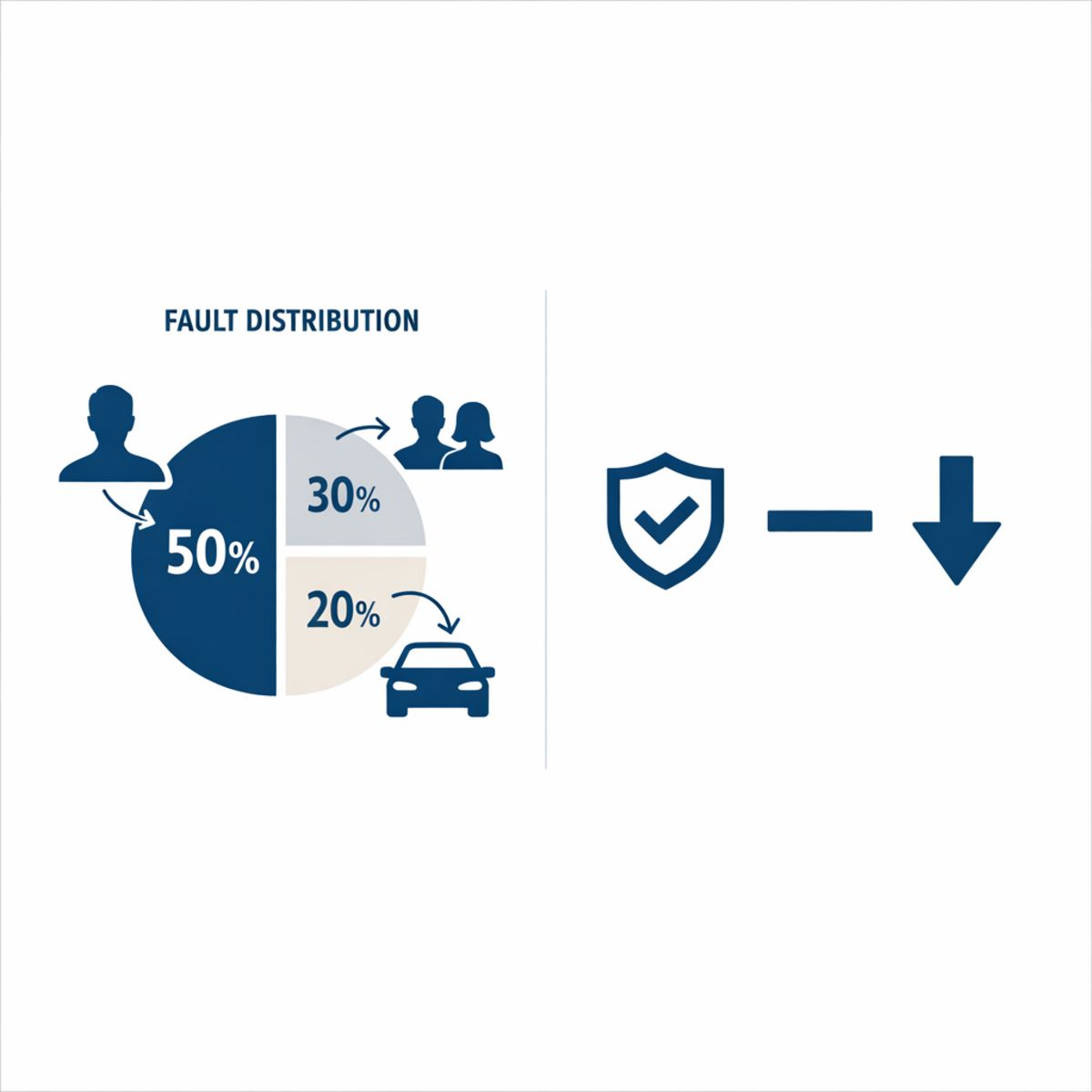
California follows a pure comparative negligence rule. This means an injured person may still seek compensation even if they were partly at fault for what happened. Instead of automatically blocking a claim, the law looks at each party’s share of responsibility and assigns a percentage of fault. That percentage is then used to reduce the injured person’s recovery.
Why California Uses a Pure Comparative Rule
For example, if one person is found 20% responsible and another person is 80% responsible, the injured person may still recover damages, but the total would generally be reduced by that 20% share. This is what people mean by pure comparative negligence in California: partial fault does not automatically end a case. It is one reason people often look into how auto injury lawyers help after a crash when trying to understand how fault may affect an injury claim.
The rule can apply in motor vehicle collisions and other injury matters where both sides may have contributed in some way. The key idea is that responsibility can be divided, and any compensation may be adjusted to reflect that division.
How Fault Is Assessed in a Shared Fault Car Accident
In a shared fault car accident, fault is usually assessed by comparing multiple sources of information rather than relying on one early conclusion. Under california fault rules, insurers and courts may look at how each driver, road condition, and sequence of events contributed to the crash. That is one reason fault disputes are common, especially when the first details are limited or unclear. People seeking car accident lawyer support for claims often learn that early incident details may be preliminary and can change as more evidence becomes available.
Evidence That May Influence Fault Percentages
Common evidence may include police reports, scene photos, witness statements, vehicle damage, roadway markings, traffic signage, weather or lighting conditions, and medical records that help connect injuries to the event. Each source may support or challenge a version of what happened. For example, damage patterns may suggest angles of impact, while photos may show lane positions or visibility issues. Witness accounts can add context, but they may differ from one another.
Why Early Reports May Change
Initial reports do not always settle liability. A first statement, officer summary, or insurer note may be based on incomplete information gathered shortly after the collision. Preliminary details are not confirmed facts. As additional records, images, repair findings, or witness interviews are reviewed, fault findings can shift. In many California injury claims, the final allocation depends on a broader review of conduct by more than one party, which is why a shared fault car accident analysis may evolve over time.
Comparative Negligence and Contributory Negligence Compared
When people search for contributory negligence vs comparative negligence, they are usually trying to understand whether sharing some blame prevents an injury claim. The key difference is simple: contributory negligence is a much stricter rule, while California uses pure comparative negligence.
What Contributory Negligence Means
In broad terms, contributory negligence is an all-or-nothing approach. If an injured person is found to have contributed to the accident at all, recovery may be barred entirely in jurisdictions that follow that rule. That is why the distinction matters so much. Even a small share of fault can have major consequences under a contributory system.
How California Fault Rules Differ
California does not follow that stricter model. Instead, it applies pure comparative negligence, which means an injured person can still recover damages even if they were partly at fault, though the recovery is reduced by their percentage of responsibility. For readers trying to understand how fault affects a claim, this is one reason it helps to learn what a personal injury lawyer does. In short, California law focuses on apportioning fault rather than automatically blocking compensation.
How Shared Fault Can Affect a Partial Fault Injury Claim
In a partial fault injury claim, compensation may be reduced based on the injured person’s assigned share of fault. The basic idea is usually percentage-based: the total damages are evaluated first, and then any reduction is applied according to the fault allocation. This is why shared fault does not automatically prevent a claim, but it can affect the final amount recoverable.
How Percentage Reductions Work
A simple example can help. If total damages are assessed at 100% and the injured person is found 20% at fault, the claim may be reduced by 20%, leaving 80% of the damages potentially recoverable. If fault were assigned at 35%, the reduction would be 35%, leaving 65%. The percentages matter because they change the outcome even when the underlying damages stay the same.
Why Fault and Damages Are Separate Issues
Disputes often involve two separate questions: what the damages are, and how fault should be divided. One side may argue about the seriousness or scope of the losses, while the other may focus on who contributed to the incident and by how much. These are distinct issues, and both can affect how a partial fault injury claim is evaluated.

How to Document Facts That May Matter in a Shared Fault Claim
In shared fault claims, clear recordkeeping may help preserve facts as they are understood over time. General documentation often includes photos of vehicle positions, roadway conditions, traffic controls, visible damage, and weather or lighting conditions. It may also include incident reports, repair estimates and invoices, medical records, receipts, and witness names and contact information. In some situations, related background materials can also be useful, such as truck driver hours of service rules explained when a commercial vehicle is involved.
A simple timeline can also be valuable. Dates for treatment, vehicle inspections, calls with insurers, emails, letters, and other communications may help keep events in order. Saving documents in one folder, whether digital or paper, can make it easier to review what was reported and when.
Organized documentation does not determine liability by itself, and it does not guarantee any particular outcome. Official findings may develop as additional evidence is reviewed by insurers, investigators, or others involved in the process. For readers looking for broader information about next steps, California car accident claim legal help may offer related context.
Records Commonly Kept After a Collision
Common categories include scene photographs, police or incident reports, towing and repair records, medical documentation, wage or work-loss records, and witness contact details. These materials may help clarify timing, conditions, and claimed losses.
Why Organized Documentation Matters
When fault is disputed or facts are still developing, consistent records can make it easier to compare statements, dates, and supporting materials. The goal is accuracy and preservation, not prediction of how a claim will be resolved.
Common Situations Where Comparative Negligence May Be Raised
Comparative negligence can come up in many California accident claims, especially when the facts are disputed and more than one version of events is presented. Under california fault rules, the analysis often focuses on what each person did, what conditions existed, and what evidence supports those details.
Common examples include rear-end crashes involving sudden stops, lane-change disputes, intersection collisions, pedestrian visibility concerns, and multi-vehicle accidents. These scenarios are often searched because they raise practical questions about how shared fault arguments may appear, but no single example automatically determines responsibility.
Multi-Vehicle and Chain-Reaction Collisions
In chain-reaction events, parties may disagree about following distance, braking, road conditions, timing, and whether one impact led to another. In these cases, evidence such as vehicle damage patterns, witness statements, and roadway conditions may all be reviewed.
Intersection and Lane-Change Disputes
Intersection and lane-change cases may involve questions about signaling, visibility, speed, traffic controls, and right-of-way. Pedestrian-related claims can also raise issues about lighting, sightlines, and driver awareness. Each situation depends on its specific facts and evidence, not assumptions based on the type of accident alone.

Frequently Asked Questions About Comparative Negligence in California
Can someone recover damages if they were partly at fault in California?
Yes. California follows a pure comparative negligence rule, which means a person can still recover damages even if they were partly at fault. Their recovery is generally reduced by their percentage of fault.
What is pure comparative negligence?
Pure comparative negligence is a rule that assigns each party a share of responsibility for an accident or injury. In California, compensation may be reduced in proportion to that share, but partial fault does not automatically bar recovery.
Who decides fault percentages in an injury claim?
Fault percentages may be evaluated by insurance adjusters during settlement discussions and, if a case proceeds, decided by a judge or jury based on the evidence. Those percentages can be disputed, and the outcome depends on the specific facts presented.
Can a police report determine fault by itself?
Not by itself. A police report can be important evidence, but fault is usually assessed using multiple sources, such as witness statements, photos, medical records, and other documentation.
Does comparative negligence apply only to car accidents?
No. Comparative negligence can apply in many personal injury matters, including slip and fall claims and other situations where more than one party may share responsibility. The rule is not limited to motor vehicle collisions.
Key Takeaways on Comparative Negligence in California
California follows a pure comparative negligence rule, which means more than one party can share fault for an accident. In practice, each person’s percentage of fault can reduce the amount they may recover, so even a partial share of responsibility can affect compensation. Understanding how shared fault is evaluated can help you better assess a claim and the issues that may come up during the process.
If you want general guidance about a claim or would like to discuss your situation and possible next steps, you can contact the team.