
A personal injury lawyer may help evaluate and pursue civil claims arising from a vehicle accident when questions develop around liability, insurance, documentation, and damages. In the context of motor vehicle collisions, that role often involves reviewing the facts of the incident, identifying potentially relevant records, communicating with insurers, and explaining how a claim may proceed under applicable law. Because each accident has different circumstances, the legal process can vary based on the available evidence, the parties involved, and the nature of the injuries or losses reported.
This article provides general educational information about personal injury claims connected to roadway incidents. The focus includes car, truck, motorcycle, rideshare, and related traffic accidents, along with the issues that commonly influence how claims are assessed. It does not assume that every crash leads to a legal case, and it does not predict outcomes, timing, or value.
What this guide covers
The sections below outline the general role of a lawyer after a vehicle accident, common claim types, the basic stages of a civil claim, and answers to frequently asked questions. The goal is to present the topic in clear, practical terms while keeping the discussion factual and broadly applicable.
What a Personal Injury Lawyer Does in Vehicle Accident Cases
A personal injury lawyer in a vehicle accident case helps evaluate and present a legal claim arising from a crash. In practical terms, that often means reviewing available facts, examining reports and records, identifying what documentation may be relevant, communicating with insurance companies, and assessing legal issues that may affect the claim. For readers seeking motor vehicle accident lawyer legal guidance, the lawyer’s role is generally focused on documentation, claim analysis, and communication rather than medical treatment or insurance decision-making.
This work can arise in claims involving passenger vehicles, trucks, motorcycles, pedestrians, or rideshare vehicles. A lawyer may help organize records, review correspondence, track deadlines, and explain how a claim process typically works. Depending on the circumstances, someone may also compare the issues involved in a broader vehicle claim with a more specific car accident lawyer claim overview.
It is also important to understand that early reports after a collision can be preliminary. Initial information may change as additional records, statements, photographs, or other verified evidence become available. Because of that, legal analysis is usually based on confirmed documentation rather than assumptions, and the exact steps can vary from one claim to another.
Core responsibilities
Common responsibilities may include reviewing crash reports, gathering medical or repair-related records, organizing evidence, handling communications with insurers, evaluating claim-related issues, and monitoring filing or notice deadlines. The process is not identical in every case, but these are common functions associated with legal representation in accident claims.
Accident types often involved
Personal injury lawyers may work on claims connected to car, truck, motorcycle, pedestrian, and rideshare collisions. The legal questions and documentation needs can differ by accident type, which is why the role often centers on careful review of the available evidence and communications tied to the claim.
When Legal Help May Be Useful After a Crash
Some collision situations involve more moving parts than others, and that is often where legal support may become more relevant in a general educational sense. A car accident lawyer or auto injury lawyers may be associated with matters where the facts are disputed, several vehicles are involved, or the sequence of events is not easy to confirm from initial reports alone.
Complex fact patterns
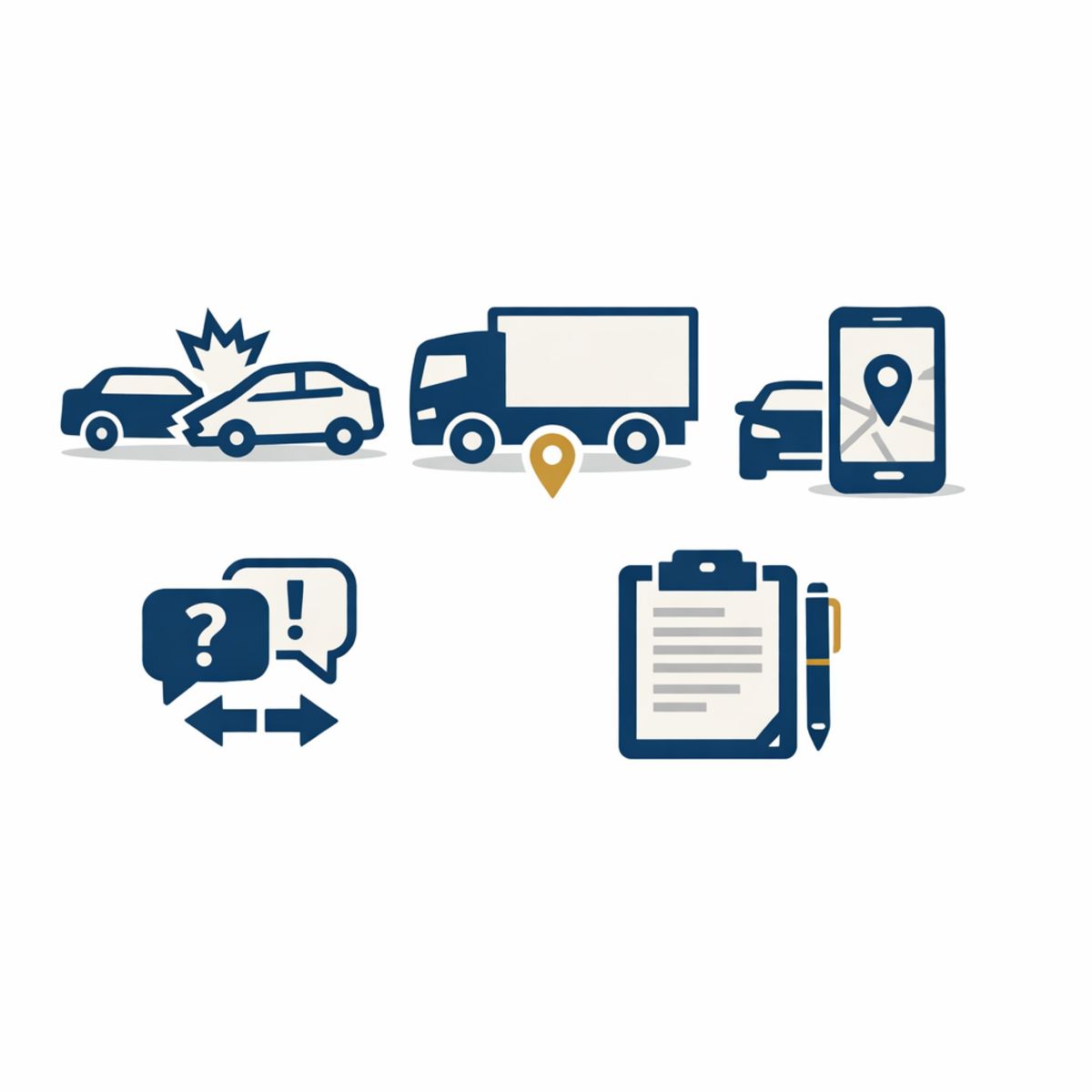
Examples can include chain-reaction crashes, collisions involving commercial vehicles, or rideshare-related incidents where driver status, company policies, and insurance layers may need closer review. In some cases, records from employers, app-based platforms, maintenance providers, or third parties may all play a role. Topics sometimes overlap with truck accident lawyer claim considerations because commercial vehicle involvement can add operational and documentation questions.
Documentation and communication issues
Legal help may also be relevant when injuries require ongoing records review, when timelines are difficult to organize, or when communications involve multiple insurers or potentially responsible parties. The same is true when coverage is unclear or when documentation needs grow over time. This does not mean every complex crash leads to formal legal action, only that certain categories of accidents can involve process issues that are more detailed than a routine claim.
How a Vehicle Accident Claim Commonly Progresses
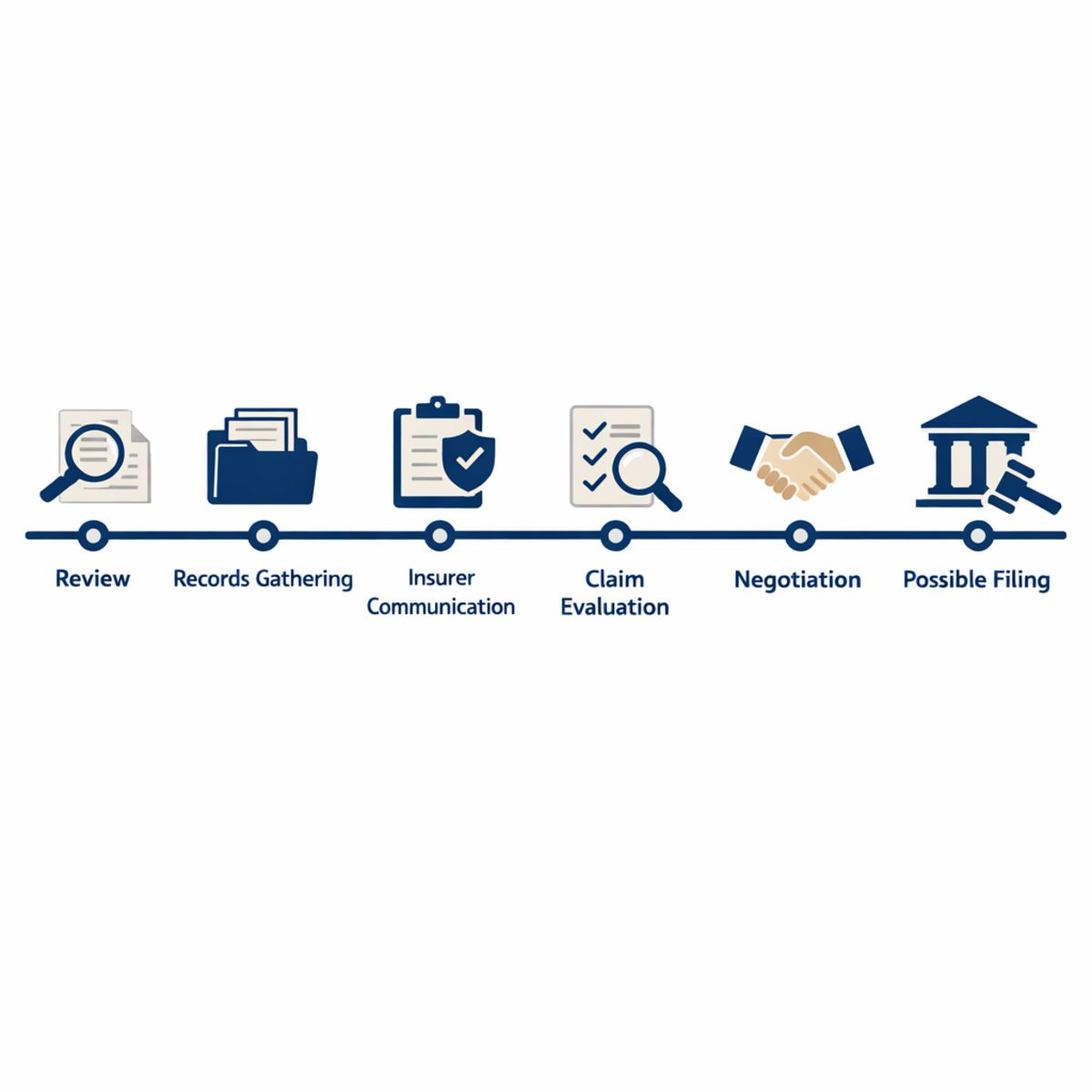
A vehicle accident claim often develops in stages, but the exact sequence can vary based on the available information, the parties involved, and procedural requirements. In general, the process begins with an initial review of the incident and then moves through record collection, insurance communication, claim evaluation, and possible resolution efforts. Early impressions may also change as additional documents or facts come in.
Early-stage review and records
At the outset, the focus is usually on gathering and organizing core materials. This may include crash reports, photographs, medical records, repair estimates, insurance details, and other supporting documentation. These records help clarify what is known, what still needs confirmation, and whether follow-up requests are necessary. The opening stage is often about building a reliable factual foundation rather than reaching immediate conclusions.
Claim development and communication
Once key records are assembled, the claim may move into a development phase that includes communication with insurers, review of applicable legal issues, and continued evidence organization. This can involve confirming coverage information, tracking treatment-related records, and assessing how the available documentation supports the claim. Readers comparing different injury scenarios may also find a pedestrian accident lawyer process overview helpful for broader context.
Possible resolution paths
After evaluation, a claim may proceed toward negotiation or other settlement discussions. In some matters, a formal filing may be considered if that step is appropriate under the circumstances. That does not mean every claim follows the same path or requires litigation. Instead, the process is best understood as a general framework that can shift as facts are verified, records are updated, and procedural needs become clearer.
Personal Injury Lawyer vs. Insurance Claim Handling Alone
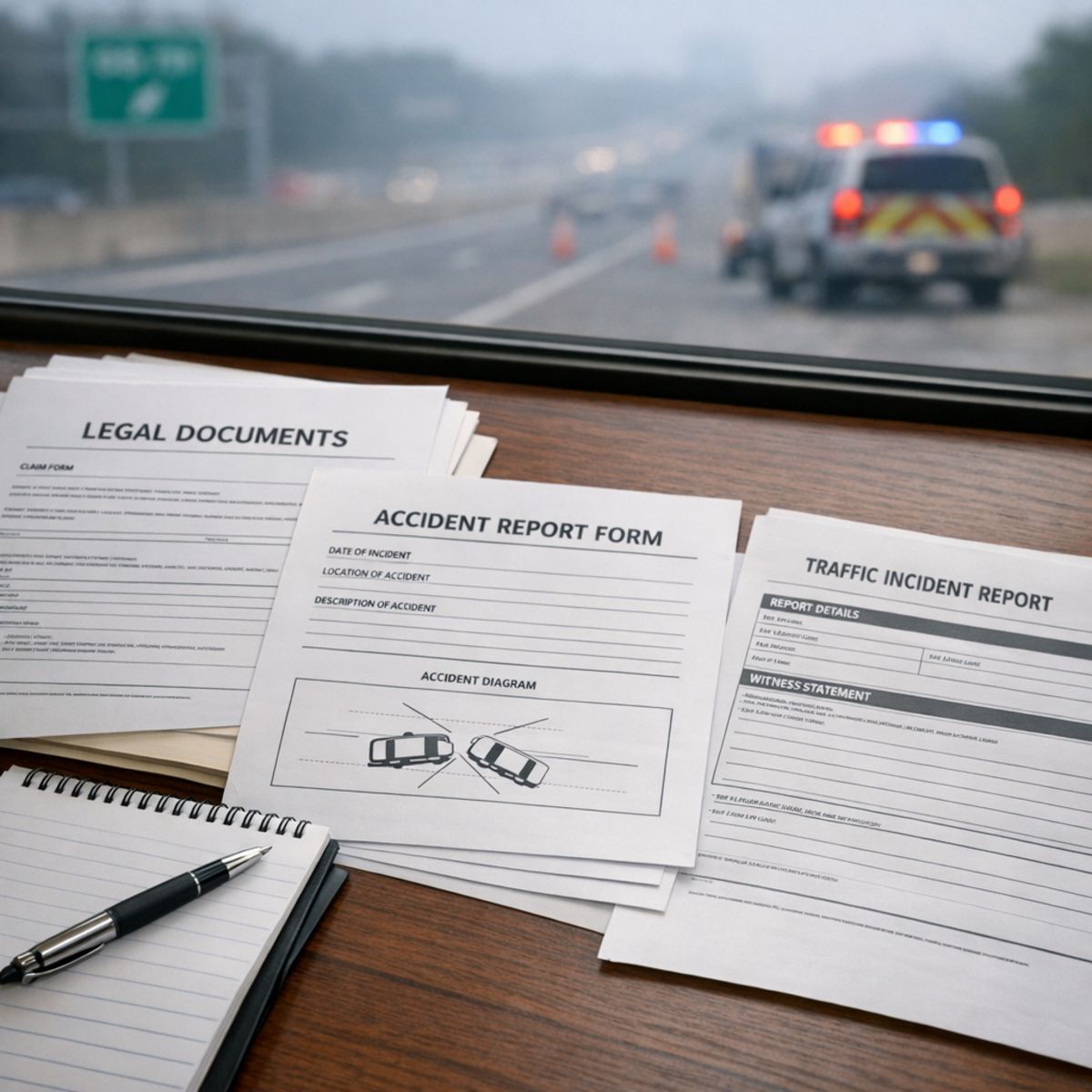
A personal injury lawyer and direct insurance claim handling serve different functions. Insurance companies generally evaluate claims from the carrier perspective, including policy terms, documentation, and claim procedures. A lawyer, by contrast, reviews legal issues, medical records, incident details, and supporting evidence from the injured person’s side of a civil claim. For readers comparing vehicle accident claim representation options, the key difference is role, not a guaranteed outcome.
Role differences
Handling a claim alone often means communicating directly with adjusters, gathering records, tracking deadlines, and organizing repair, medical, or wage-loss information. Legal representation may add structured issue spotting, review of documentation for completeness, and analysis of how facts may relate to liability or damages. In practical terms, the comparison is often about who is managing communication, evidence organization, and follow-up.
When questions become more complex
If questions arise about facts, coverage, documentation, or the extent of losses, legal review may become more relevant. That does not mean every claim requires a lawyer, and it does not mean insurance handling is improper. Rather, the decision depends on the complexity of the claim, the records involved, and how comfortable a person feels managing the process independently.
How to Organize Information That Commonly Supports a Vehicle Accident Claim
General claim documentation often includes a mix of official records, personal notes, and follow-up communications. Available materials vary by incident, and some early information may be preliminary or later updated. In broad terms, organized records can help clarify the timeline, identify open questions, and make it easier to review what information is already available.
Common record categories
- Collision or incident reports, including report numbers and responding agency details
- Photographs or video showing vehicle positions, damage, road conditions, weather, and visible injuries
- Insurance information, such as policy details, claim numbers, and adjuster contact information
- Repair-related materials, including estimates, invoices, towing receipts, and vehicle inspection notes
- Medical records and billing documents that reflect evaluation, treatment, and related expenses
- Written correspondence, including emails, letters, text messages, and notes of phone conversations
Why organization matters
A simple structure by date or category can make review and communication more efficient and reduce duplication when information comes from multiple sources. Organized files may also help separate confirmed facts from preliminary details. For readers comparing accident-related claim topics across vehicle types, this overview can be read alongside what motorcycle accident attorneys do for additional general context.
Frequently Asked Questions
What does a personal injury lawyer do after a car accident?
A personal injury lawyer may review the facts of the collision, gather documents, and assess potential insurance and liability issues. The role often includes communicating with involved parties and evaluating records related to the accident.
When might a truck accident lawyer be involved in a claim?
A truck accident lawyer may be involved when a crash includes commercial vehicles, company policies, driver logs, maintenance records, or multiple potentially responsible parties. These claims can involve additional regulations and business entities beyond a typical passenger vehicle collision.
How is an Uber accident claim different from a standard car accident claim?
An Uber accident claim may involve questions about the rideshare driver’s app status, available insurance coverage, and the roles of multiple insurers. The underlying facts still matter, but the coverage analysis can be more layered than in a standard car accident claim.
What records are commonly reviewed in a motor vehicle accident case?
Commonly reviewed records may include the police report, photographs, witness statements, medical records, repair estimates, insurance communications, and, in some cases, phone, vehicle, or commercial driving records. The specific documents depend on the type of collision and the issues being examined.
Contact the Team for More Information
If you would like to discuss a motor vehicle accident matter or learn more about the firm’s process, you are welcome to contact the team for additional information. Reaching out does not, by itself, create an attorney-client relationship.
Key Takeaways
In many vehicle accident cases, a personal injury lawyer may help evaluate, organize, and present a claim, especially when the facts are disputed or insurance issues are complex.