

If you are wondering whether you should call a slip and fall accident lawyer, the short answer is that it depends on the facts. Not every fall leads to a legal claim, and getting hurt on someone else’s property does not automatically mean the owner is legally responsible. A careful review usually focuses on what caused the fall, whether the property condition was dangerous, whether the owner knew or should have known about it, and what evidence exists to document what happened.
Legal guidance may become more important when there are serious injuries, unclear facts, disputed fault, or concerns that evidence could disappear. Photos, incident reports, surveillance footage, and witness statements can all matter, and early decisions sometimes affect whether that information is preserved. A lawyer’s role is to evaluate liability, documentation, and next steps—not to promise a result.
Why timing matters after a slip and fall
Timing can matter because property conditions may change quickly, reports may be brief or incomplete, and witness memories can fade. Taking a calm, informed approach early on can help you better understand whether legal help is necessary and what factors may affect a potential claim.
What a Slip and Fall Accident Lawyer Does
A slip and fall accident lawyer helps people evaluate and pursue claims after an injury on someone else’s property. In a premises liability case, the lawyer’s role is not to promise a result, but to investigate whether a hazardous condition existed, whether the property owner knew or should have known about it, and whether that condition caused the injury and related damages.
This often includes reviewing incident reports, medical records, photos, video, witness statements, and maintenance logs. A lawyer may also help preserve evidence before it disappears and identify all potentially responsible parties, such as a property owner, manager, tenant, or maintenance company. They communicate with insurers and property owners, explain legal deadlines, and assess whether the claim appears viable under the available facts. For readers comparing injury matters more broadly, accident case guidance from the firm may also provide helpful context.
Core tasks in a premises liability claim
Core tasks usually include investigating unsafe conditions, analyzing notice, connecting the fall to the injury through evidence, estimating damages, and developing a claim strategy. A personal injury lawyer may also handle communications with insurance adjusters so statements and records are presented carefully and consistently.
What a lawyer cannot determine immediately
A lawyer cannot determine fault, case value, or outcome right away. Those issues depend on facts, records, credibility, legal deadlines, and the law that applies to the property and the incident. Early legal evaluation is different from general advice because it is based on the specific evidence in the claim.

Signs It May Be Time to Speak With an Attorney
After a fall, not every situation requires legal help. Still, some facts make it worthwhile to speak with an attorney for a clearer view of your options. A legal review can be especially useful when the injury is significant, fault is disputed, or insurance issues start to complicate the process.
Serious injuries or ongoing medical treatment
If the fall led to a fracture, head injury, back injury, or symptoms that continue over time, it may help to get legal guidance. The same is true when treatment is ongoing, work is affected, or the full impact of the injury is still developing. Delayed symptoms can also make a claim harder to evaluate without support.
Disputed fault or unclear responsibility
Questions about who controlled the property often come up in falls at stores, apartment complexes, parking lots, hotels, and workplaces. A property owner may deny knowing about the hazard, argue the condition was obvious, or point to another company. When multiple parties may be involved, an injury attorney can help assess whether the facts support a claim.
Insurance pressure or early settlement contact
It may also be smart to get legal review if a claim is denied, an insurer asks for a recorded statement, or you are sent documents before you understand the extent of your injuries. Early settlement offers can be difficult to evaluate without context. If you want more guidance on when to hire a personal injury attorney, a consultation can help clarify next steps without pressure.
- Serious or worsening injuries
- Unclear property ownership or maintenance responsibility
- Denied insurance claims
- Requests for recorded statements or quick decisions
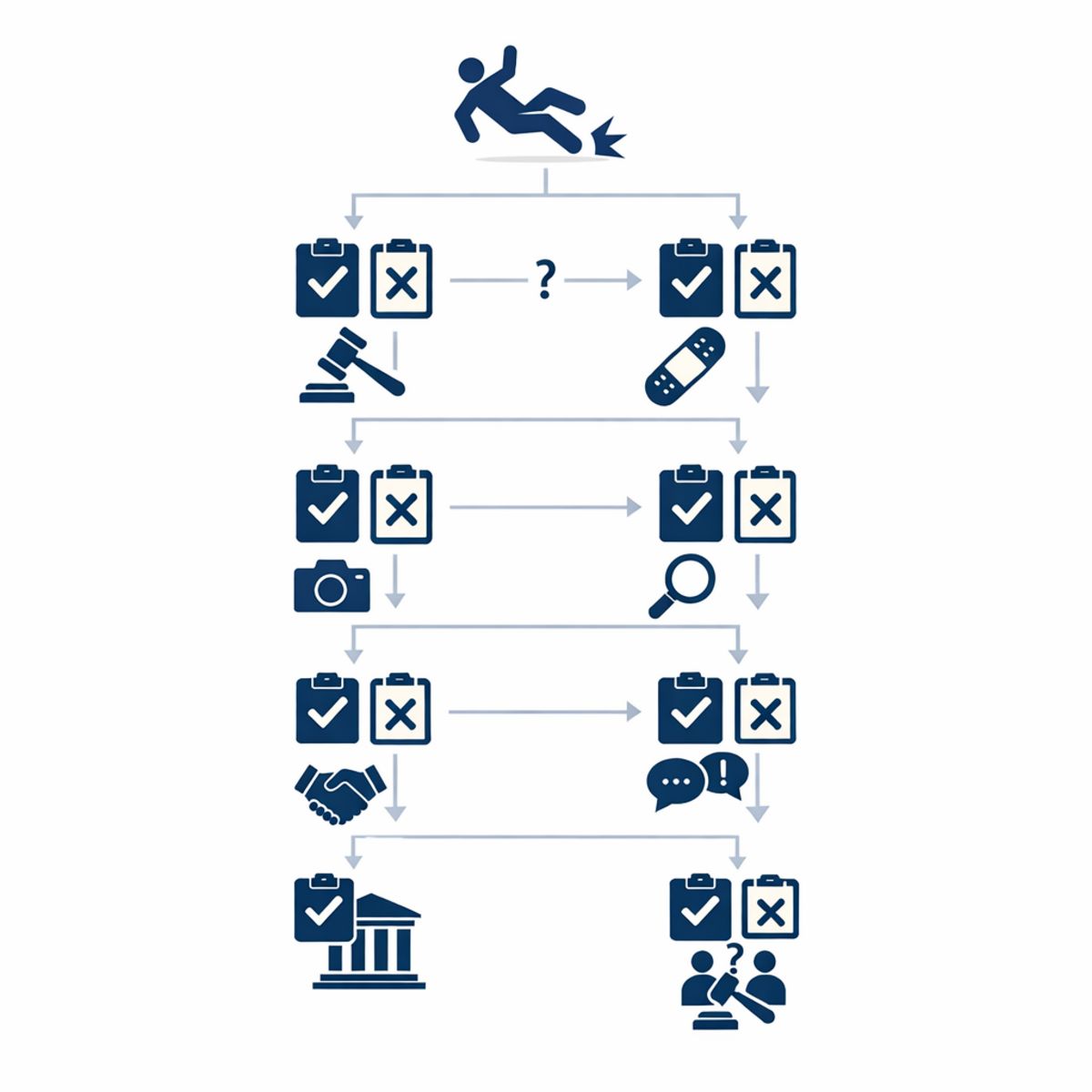
What to Do After a Slip and Fall Accident

After a slip and fall accident, it can be hard to think clearly. A simple step-by-step approach can help you protect your health, preserve evidence, and avoid mistakes that may make it harder to explain what happened later. Focus on getting care, documenting the scene, and keeping your information consistent.
1. Get medical care and document symptoms
Seek medical attention as soon as you can, even if you are unsure how serious your injuries are. Prompt evaluation creates a record of your symptoms, the date of the incident, and any recommended treatment. Follow care instructions, attend follow-up visits, and keep copies of discharge papers, bills, prescriptions, and notes about how you feel in the hours and days afterward.
2. Report the incident and request a copy
Notify the property owner, store manager, landlord, or other responsible party as soon as possible. Ask that an incident report be created and request a copy if one is available. Write down the name and title of the person you spoke with, the time of the report, and any reference number or follow-up instructions you receive.
3. Preserve photos, witnesses, and communications
If you can do so safely, photograph the area, the hazard, lighting, floor surface, weather conditions, your footwear, and any visible injuries. Evidence can change quickly, especially if a spill is cleaned or a warning sign is moved. Collect witness names and contact details, and save receipts, medical records, emails, texts, and any other communications related to the incident.
4. Be careful with statements and paperwork
Avoid detailed public statements or rushed explanations before you understand the facts. Read forms carefully before signing, and keep copies of anything you submit or receive. If you are researching next steps, it may also help to read how to choose a personal injury law firm so you know what questions to ask and what records to keep.
How a Slip and Fall Claim Is Evaluated
A slip and fall claim is usually evaluated by reviewing both the facts of the incident and the available evidence. Lawyers often start by asking whether a dangerous condition existed, such as a wet floor, uneven surface, poor lighting, or debris in a walkway. They also look at whether the property owner or occupier knew about the hazard, or reasonably should have known about it through proper inspection and maintenance.
Key liability questions
A strong premises liability claim often depends on notice and causation. Actual notice means someone was aware of the problem. Constructive notice means the condition may have existed long enough that it should have been discovered and fixed. The review also considers whether the hazard directly caused the fall, or whether comparative fault may reduce recovery if the injured person shares some responsibility.
To assess these issues, legal teams may review maintenance logs, surveillance footage, incident reports, photographs, witness statements, and medical records. In some cases, readers seeking legal support for serious accident claims may notice that the same careful evidence review applies across many injury matters.
How damages are documented
Damages are commonly documented through treatment records, proof of missed work, receipts, and consistent reporting of symptoms. If a claim cannot be resolved informally, a civil litigation attorney may become involved to pursue the matter through formal negotiation or court proceedings.

Handling a Claim Alone vs. Working With a Lawyer
Some people prefer to start by handling a claim on their own, especially after a simpler incident involving minor damage, clear facts, and limited medical treatment. That approach may feel more manageable when the paperwork is straightforward and liability is not heavily disputed.
Working with a lawyer may add value when the situation becomes harder to sort out. An attorney can help organize records, preserve evidence, track deadlines, and manage communications with insurers. This can be especially useful when injuries are more serious, fault is disputed, or multiple parties are involved.
When a claim becomes more complex
Claims often become more complex when witness accounts differ, medical care continues over time, or the full impact of the injury is still developing. In those situations, legal review may help clarify what documents matter and how negotiations are handled. Readers looking for broader guidance may also find it helpful to review what to know after a crash before deciding on next steps.
The right path depends on the facts, the severity of the harm, and your comfort level with gathering evidence and negotiating. For example, a more specialized matter may call for motorcycle accident legal representation if the claim involves unique risks or injuries.

Questions to Ask About Fees and Consultations
Before hiring counsel, it helps to treat the first meeting as a chance to gather clear information. Ask how fees work, whether there are case-related costs, and what happens after the consultation. You can also ask what documents to bring, who will handle updates, and what timeline to expect in the early stages of a claim. If your matter involves a crash, speaking with a car accident lawyer support in Irvine team may help you understand the process. Keeping your questions practical can reduce uncertainty and help you compare firms with confidence.
Helpful questions before a consultation
- How are fees explained, and are there other case costs to know about?
- What records, photos, or insurance documents should you bring?
- Who will be your main point of contact?
- What are the likely next steps and expected timeline?
Frequently Asked Questions
When should I contact a slip and fall accident lawyer?
It is usually helpful to reach out as soon as possible, especially if your injuries are serious or there is a dispute about what happened. Early legal guidance can help preserve evidence, identify witnesses, and avoid mistakes when speaking with insurers.
What evidence is most helpful after a slip and fall?
Useful evidence often includes photos of the scene, an incident report, witness names and contact details, medical records, and any messages or letters about the accident. Keep receipts, notes about your symptoms, and a timeline of events as well.
Can I still have a claim if I was partly at fault?
Possibly. Being partly at fault does not automatically mean you cannot recover compensation, but it can affect how a claim is evaluated depending on the facts and the law that applies.
Do I need a lawyer for every slip and fall accident?
Not always. A minor incident with no meaningful injury may not require representation, but a slip and fall accident lawyer can be especially helpful when injuries are significant, liability is unclear, or an insurance company is denying responsibility.
What should I bring to an initial consultation?
Bring any incident reports, photographs, medical records, insurance letters, receipts, and contact information for witnesses. It also helps to prepare a simple timeline of what happened, what treatment you received, and how the injury has affected you.
Talk Through Your Situation With the Right Information in Hand
If you are dealing with a recent fall, questions about liability, or communications from an insurer, it may help to speak with a legal team once you have the basic facts together. Gather any incident reports, photos, medical records, and insurance correspondence you have available before reaching out.
A case review discussion can help you understand possible next steps, but every situation depends on its specific facts. If you are ready to talk, contact the team for clear, professional guidance.
Final Takeaway
Whether you need a slip and fall lawyer usually comes down to a few practical factors: how serious the injury is, how strong the evidence is, whether fault is disputed, and how complicated the claim becomes. If your injuries are significant, the property owner denies responsibility, or the insurance process feels unclear, legal guidance may be worth considering.
The most important next step is to act promptly. Document the scene, preserve records, seek appropriate medical care, and make decisions based on the facts of your situation. A clear, informed evaluation can help you understand your options and avoid preventable mistakes.