

Many people start looking for a personal injury law firm after a crash because they need clear guidance, not complicated legal terms. After a car accident, it can be hard to know what to do first, what to say to insurance companies, or how to protect a possible injury claim. A law firm in this area typically helps manage insurance communications, gather evidence, review liability, and document losses such as medical bills, lost income, and pain-related damages.
Just as important, the right car accident lawyer can make the process feel more organized and less overwhelming. Responsiveness, clear explanations, and a focused approach to your type of case can affect how informed and supported you feel from start to finish.
This article explains what to look for in a firm, what questions to ask before hiring one, and how to compare your options without rushing a decision during an already stressful time.
What to Look for in a Personal Injury Law Firm
When comparing a personal injury law firm for a car accident case, focus on qualities that directly affect claim outcomes rather than broad marketing promises. A strong starting point is whether the firm has meaningful experience with crash-related matters, including liability disputes, injury documentation, insurance negotiations, and the practical steps needed to build a claim. Readers exploring car accident lawyer services for crash claims should look for a team that can explain how it handles these issues from intake through resolution.
Relevant case focus matters
Not every legal practice that handles injury matters has the same depth in motor vehicle collisions. A firm that regularly works on car accident and related roadway claims is often better prepared to identify police report issues, preserve photos and vehicle damage evidence, review medical records, and respond to common insurance company tactics. It also helps to ask whether the attorneys are prepared to move beyond settlement discussions if the facts or insurer response require litigation. That kind of readiness can be an important indicator when evaluating an accident lawyer or injury attorney.
Clear communication is part of quality representation
Another key factor is how the firm communicates. A reliable auto accident attorney should explain next steps clearly, outline who will handle day-to-day case activity, and set expectations for updates and response times. Readers should understand whether they will speak mainly with a lawyer, a case manager, or a larger support team, and how evidence gathering, medical documentation, and insurance negotiations will be managed. Clear answers on process, accessibility, and strategy often reveal more than advertising language alone.

How the Right Law Firm Can Help Strengthen a Car Accident Claim
Working with a qualified law firm may provide practical support throughout the claims process, especially when records, deadlines, and insurer communications start to pile up. Rather than changing the facts of a case, legal guidance often helps present those facts more clearly and consistently. For many people, that includes understanding how a personal injury attorney helps after a crash.
Support with evidence and insurer communication
A firm may help organize police reports, medical records, photographs, repair estimates, witness information, and written correspondence in one place. That kind of structure can make it easier to track what has been documented and what may still be needed. Legal teams may also assist with preserving evidence early and handling routine communication with insurance representatives so clients can avoid confusion or unnecessary back-and-forth.
Reducing avoidable claim mistakes
Another benefit is reducing preventable errors, such as delayed documentation, incomplete records, missed deadlines, or inconsistent statements. Careful guidance may help clients respond more clearly and keep their claim materials aligned over time. Still, every car accident case is different, and any outcome depends on the specific facts, questions of liability, and the quality of the available evidence.

Questions to Ask Before Hiring a Car Accident Attorney
If you are comparing firms, the right questions can tell you a lot about how a car accident attorney or auto accident lawyer will manage your claim. A good consultation should leave you with a clear picture of who is responsible, how the case will move forward, and what the firm needs from you right away.
Who will actually handle your case?
Ask whether the lawyer you meet will stay involved or whether most of the work will be handled by another attorney, case manager, or support staff. That is not necessarily a problem, but the firm should explain roles clearly so you know who to contact with questions, records, or updates.
You should also ask how updates are shared, how often you can expect communication, and what documents the firm wants early, such as crash reports, photos, medical records, insurance information, and witness details.
What should the early timeline look like?
A reliable firm should be able to explain the first steps after the consultation. Ask what happens immediately, how evidence is preserved, whether the firm will contact insurers, and what you need to do in the first few days or weeks. Clear next steps often reflect an organized process.
If you are still deciding when to hire a personal injury attorney, it can help to compare how different firms describe timing, investigation, and client responsibilities.
Other smart consultation questions include:
- How much experience does the firm have with car accident claims similar to yours?
- What investigation steps will be taken to gather evidence and evaluate liability?
- Is the firm prepared to litigate if the insurance company does not make a fair offer?
- How are timelines explained, and what factors could slow the case down?
- What responsibilities will you have after signing, including treatment updates and document sharing?
- What are the next steps after the initial consultation if you choose to move forward?
Comparing Personal Injury Lawyers: Signs of a Good Fit
When comparing personal injury lawyers, it helps to look past slogans and focus on how each firm actually communicates. A good fit often shows up in small but important details: how quickly the office responds, whether staff members answer questions clearly, and whether the attorney explains next steps in plain language instead of relying on vague promises. If you are reviewing experienced car accident lawyer representation options, consistency matters just as much as credentials.
Responsiveness and clarity
A strong consultation experience usually feels organized. Intake questions should make sense, follow-up should be timely, and explanations should be easy to understand. If one accident lawyer gives direct answers about process, communication, and expectations while another stays general, that difference can tell you a lot. Readers should also compare whether the firm’s website, consultation, and later communication all reflect the same level of professionalism and clarity.
Fit depends on the case details
The best fit is not always the firm with the biggest advertising presence. It may be the one whose approach matches the complexity of the crash, the injuries involved, and the amount of guidance you want throughout the claim. Multi-vehicle collisions, disputed fault, or heavy documentation needs may call for more hands-on legal support, while a simpler matter may still require clear strategy and dependable communication. Comparing firms this way can help you make a more informed decision.
Understanding Fees and Consultations
Cost is often one of the first concerns people have when deciding whether to speak with legal counsel. A helpful first step is to ask how fees are structured, what the initial consultation includes, and whether there may be separate case-related expenses. Clear answers in plain language can make it easier to understand what to expect.
It is also reasonable to ask what documents or information to bring so the conversation can be productive. This may include records, correspondence, photos, or other materials related to the situation. Asking how case reviews are handled and what happens after the consultation can also help reduce uncertainty.
What to ask during a consultation
Consider asking about communication expectations, who your main point of contact will be, how updates are typically shared, and what kinds of expenses may come up during the process. If you want more context before speaking with a lawyer, this guide on what to know after a crash may be useful.
How to Choose a Personal Injury Law Firm Step by Step
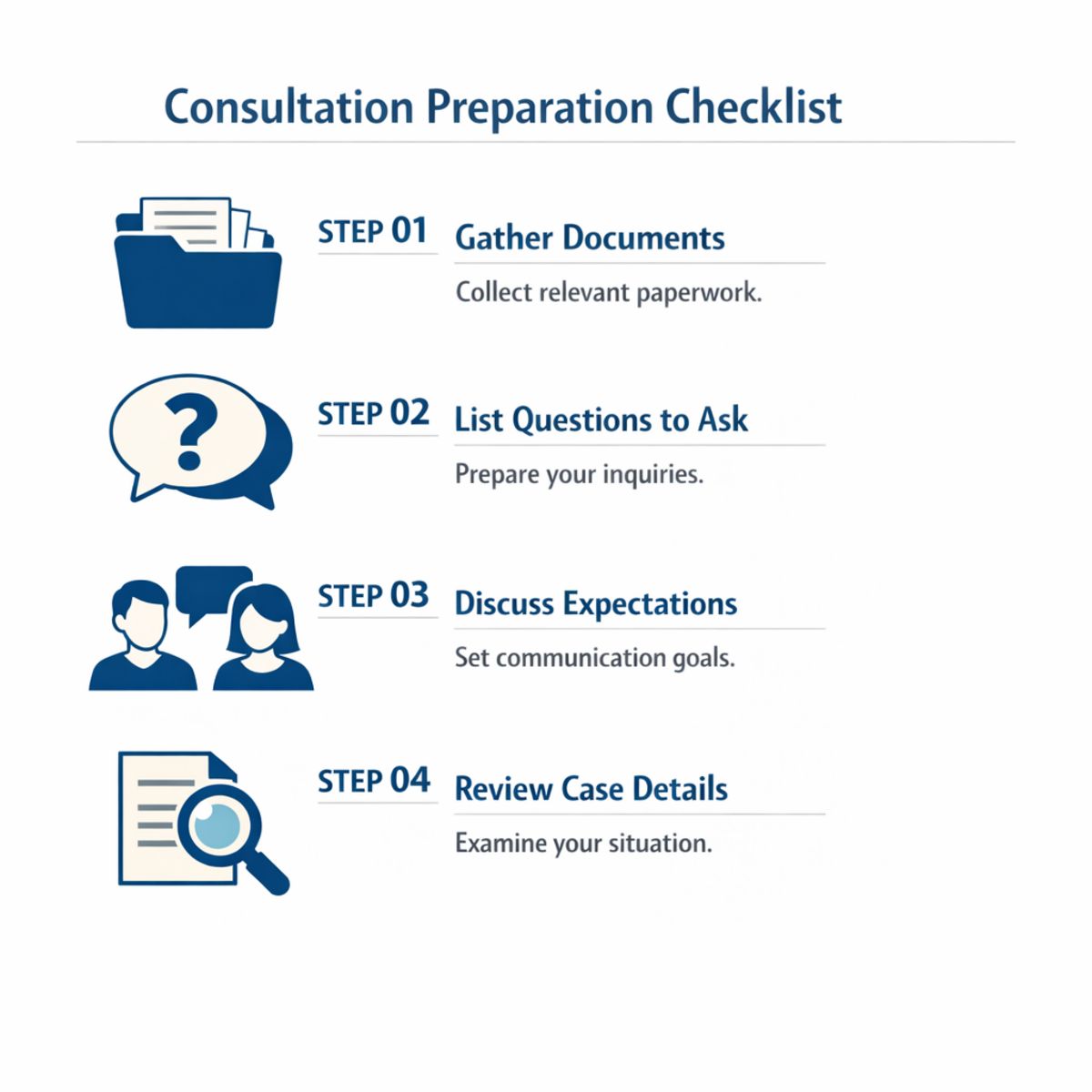
If you are wondering how to choose a personal injury law firm, use a simple process that helps you stay organized while recognizing that every case can vary. If you want car accident lawyer help for next steps, start by comparing firms in a practical, step-by-step way.
A simple decision framework
- Step 1: Gather basic crash documents, insurance details, photos, and a short list of questions before contacting any firm.
- Step 2: Shortlist firms that show relevant car accident experience, explain their services clearly, and make it easy to understand how they handle claims.
- Step 3: Compare consultations by looking at communication style, how clearly the process is explained, and whether the firm seems focused on the details of your case.
- Step 4: Choose the firm that outlines next steps clearly, responds professionally, and appears prepared to handle your claim responsibly from the start.
Frequently Asked Questions
When should I contact a personal injury law firm after a car accident?
Many people reach out as soon as practical after a crash. Early contact may help you understand general next steps, preserve important documents or evidence, and avoid missing key details. The right timing can vary based on the situation, so prompt guidance is often useful.
What should I bring to a consultation with a car accident attorney?
Bring any materials you already have, such as the crash report, photos, insurance information, medical records or bills if available, repair estimates, and correspondence related to the accident. It also helps to bring a timeline of events and a short list of questions you want answered.
How do I compare personal injury lawyers for a crash claim?
Focus on practical factors like how clearly the lawyer explains the process, whether they have relevant experience, how responsive they are, and whether communication feels straightforward. You can also ask how updates are handled and what information they need from you at each stage.
Can an auto accident lawyer help if liability is disputed?
Yes, disputed liability is one reason people seek legal guidance. A lawyer may help review available evidence, identify missing documentation, and explain how fault-related issues can affect the claim process. Because every case is different, the value often lies in careful review and clear guidance rather than assumptions.
When It May Be Time to Contact the Team
If you are dealing with unclear liability, pressure from an insurance company, or uncertainty about what to do next, it may help to speak with a legal team. Professional guidance can be useful when the details of a car accident claim feel difficult to sort through or when you want a clearer understanding of your options.
A practical next step after reading
If you still have questions about your crash claim or want to better understand your next steps, the team is available to listen and provide guidance in a calm, professional way. Reaching out can help you get clarity without pressure or promises about the outcome.
Final Thoughts on Choosing the Right Firm
Choosing a personal injury law firm should come down to a few core factors: relevant experience, clear communication, a transparent process, and confidence that the firm is a good fit for your situation. After a stressful event, the right support can make the next steps feel more manageable. Take time to compare your options carefully, ask direct questions, and trust a process that feels clear and respectful. An informed choice can help you move forward with greater peace of mind.
Choose clarity, experience, and trust
The best decision is usually a thoughtful one. Focus on clarity, experience, and trust, and you will be in a stronger position to choose support that fits your needs.