

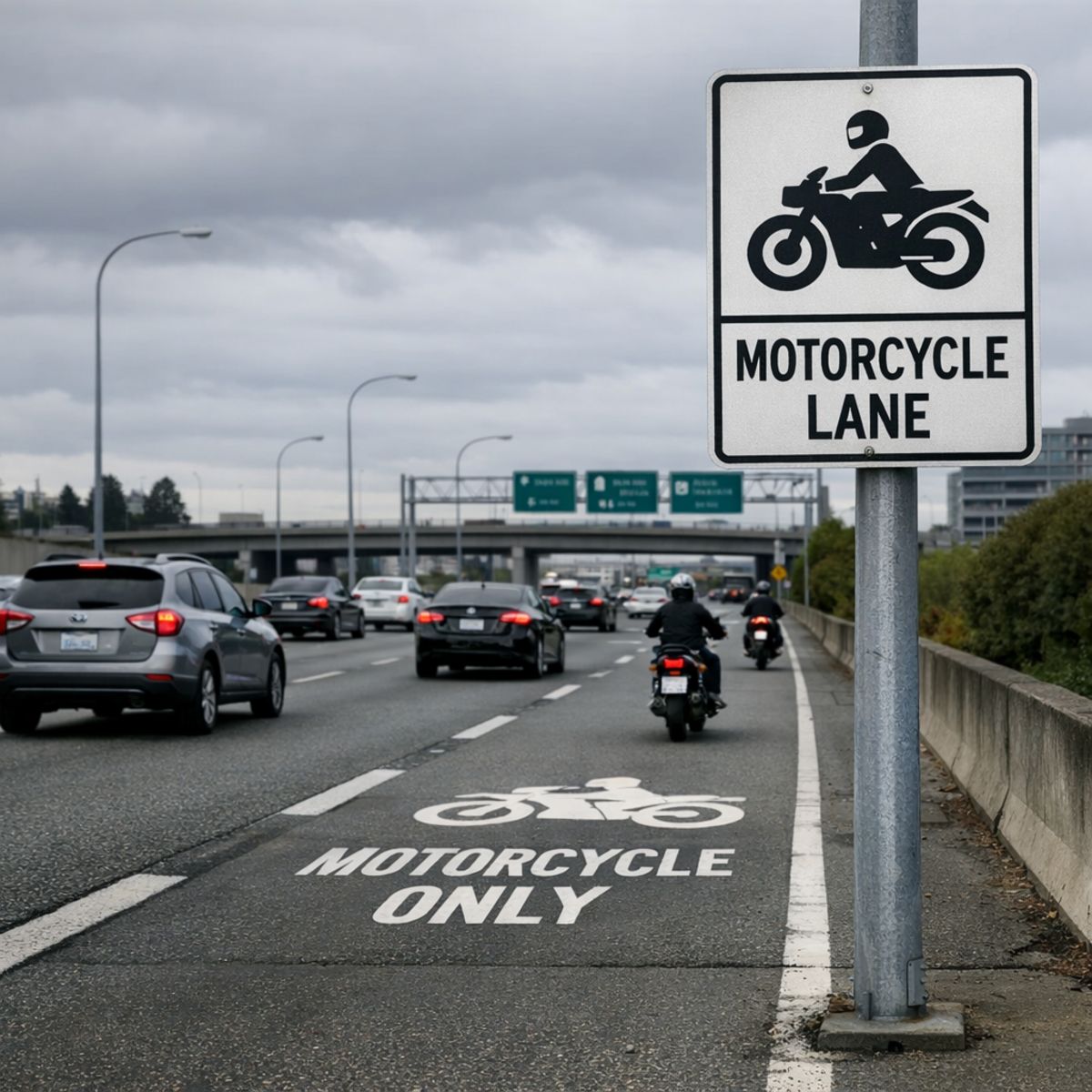
Motorcycle accident attorneys often become part of the conversation when a collision raises questions about fault, injuries, insurance coverage, and documentation. Motorcycle crashes can involve distinct legal and insurance issues, including disputes about visibility, lane positioning, road conditions, protective gear, and the severity of injuries. In that context, attorneys generally help investigate the facts, organize records and evidence, communicate with insurers, and evaluate available legal options based on the information that can be verified.
This article is intended to provide general information about that process, not case-specific legal advice. In many matters, key details remain under investigation for some time, and early reports or assumptions should not be treated as confirmed unless they are supported by evidence such as photographs, witness statements, medical records, or official findings.
Why this topic matters after a motorcycle crash
Interest in this topic is common because motorcycle injury claims may involve serious factual and insurance disputes without necessarily leading to litigation. Questions can arise about driver awareness, roadway hazards, vehicle damage, comparative responsibility, and policy terms. A clear understanding of the legal process can help frame how claims are reviewed and why careful documentation often plays a central role.
What Motorcycle Accident Attorneys Typically Do
Motorcycle accident attorneys are lawyers who handle injury-related legal matters that arise after motorcycle collisions. In plain terms, they help people understand their legal options, organize the facts of a claim, deal with insurance issues, and pursue compensation when someone has been hurt. Depending on the situation, their work may overlap with broader motor vehicle accident lawyer services, but motorcycle claims often involve case-specific facts and evidence.
Their role is usually both legal and administrative. That can include reviewing crash reports, collecting medical and employment records, preserving photos or other evidence, evaluating insurance coverage questions, and communicating with insurers or opposing parties. If a dispute cannot be resolved through negotiation, they may also prepare the matter for litigation, though not every case requires a lawsuit.
Core responsibilities in a motorcycle injury claim
- Reviewing police reports, witness statements, photographs, and other available evidence
- Gathering medical records, bills, and other documents tied to the injury claim
- Assessing insurance policies, coverage limits, and claim-related disputes
- Preparing and presenting a demand for compensation based on the available facts
- Negotiating settlement issues and supporting litigation if early resolution does not happen
Why motorcycle cases can differ from other crash claims
Motorcycle injury claims can involve issues that are less common in other traffic cases, such as visibility disputes, questions about road surface conditions, and more serious physical injuries. Because of that, attorneys often focus closely on how the collision happened, what evidence is available, and how the injuries affect daily life, work, and future care needs.
How Legal Representation Can Help Organize a Claim
After a motorcycle collision, one of the biggest challenges is often keeping the claim organized. Legal representation may help by gathering records from multiple sources, reviewing what is already available, and identifying gaps in documentation before information is submitted to an insurer or another party. This can include medical records, photographs, repair estimates, wage-related paperwork, and correspondence connected to the incident.
Documentation and claim organization
Attorneys often help structure a claim around a clear timeline, supporting records, and consistent descriptions of events. That process may make it easier to track deadlines, organize updates, and present materials in a way that is easier to review. In some situations, legal counsel may also help compare a motorcycle-related claim with broader injury claim issues discussed in how a personal injury attorney helps, especially when documentation needs overlap.
Communication with insurers and other parties
Legal representation may also help centralize communication among insurers, medical providers, repair documentation, and other records tied to the claim. This can reduce confusion when multiple requests for information are involved and help keep responses consistent. In some cases, readers looking at related motor vehicle claim processes may also find context in car accident lawyer claim support. The practical benefit is not a guaranteed result, but a more structured way to manage paperwork, deadlines, and communication throughout the claims process.
How a Motorcycle Accident Claim Commonly Progresses
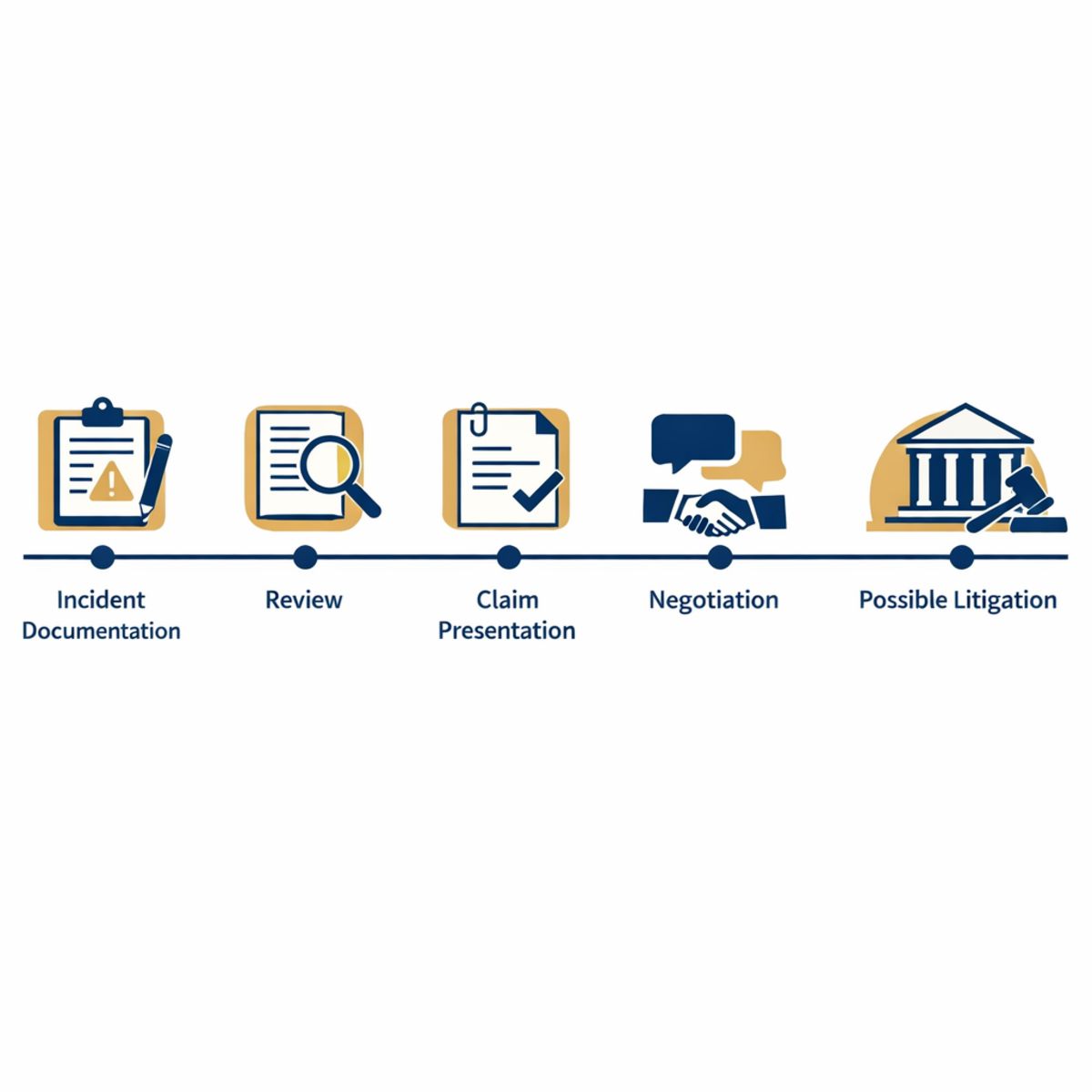
A motorcycle accident claim often develops in stages rather than through a single decision. The exact path can vary based on the facts, available insurance coverage, injury severity, and procedural requirements. In many situations, early reports and initial statements are only preliminary, so later records may add important context.
Early review and record collection
1. Initial fact gathering and report review. The process commonly begins with a review of basic incident details, such as where the collision occurred, who was involved, whether witnesses were identified, and what photographs or scene documentation exist. Police or traffic collision reports may be part of this stage, but they can be incomplete or preliminary when first created.
2. Collecting medical, repair, and insurance records. Supporting materials often include medical records and billing information, motorcycle repair estimates or total-loss documentation, insurance policy details, and other proof of out-of-pocket losses. These records help create a clearer picture of both the event and its effects.
Claim evaluation, presentation, and dispute resolution
3. Evaluating liability issues and damages. After records are assembled, the claim is commonly assessed in general terms for fault-related issues, comparative responsibility questions, and categories of damages. This may involve reviewing how the crash happened, the nature of the injuries, property damage, and other documented losses.
4. Presenting a claim and responding to insurer requests. A demand package or claim submission may then be presented to the appropriate insurer. From there, the insurance company may ask for additional records, clarification, or supporting documentation before taking a position on value or responsibility.
5. Negotiation, possible filing, and continued case development. If disputes remain, the matter may continue through negotiation and further evidence development. In some cases, filing a lawsuit becomes part of the process, though that is not always necessary. For a broader look at the motorcycle accident lawyer case process, this stage is often where legal and insurance issues become more detailed.
Motorcycle Accident Attorneys Compared With Other Injury Lawyers
Motorcycle accident matters are often compared with other vehicle injury cases because they share core negligence principles, yet the facts behind each claim can look very different. A lawyer handling motorcycle collisions may review many of the same categories of evidence used in vehicle accident claim representation options, while also focusing on rider exposure, lane visibility, road surface conditions, and helmet or protective gear questions.
How motorcycle claims differ from car accident claims
Compared with a car accident lawyer claim overview, motorcycle claims more often involve direct questions about rider vulnerability and whether another driver failed to notice a smaller vehicle. Documentation may place added emphasis on sight lines, lane changes, intersection movements, skid marks, and roadway debris or potholes. Injury patterns can also differ in general terms because riders have less physical protection than occupants inside passenger vehicles.
Where truck accident claims overlap and diverge
Motorcycle and truck cases can overlap when the crash involves speed, blind spots, turning movements, or disputed fault. However, truck accident lawyer claim differences may include commercial driver logs, maintenance records, company policies, vehicle regulations, and multiple insurance layers. In both categories, the legal framework may be similar, but the investigation and supporting records can vary based on the vehicles involved and the circumstances of the collision.
Common Cost and Case Evaluation Factors
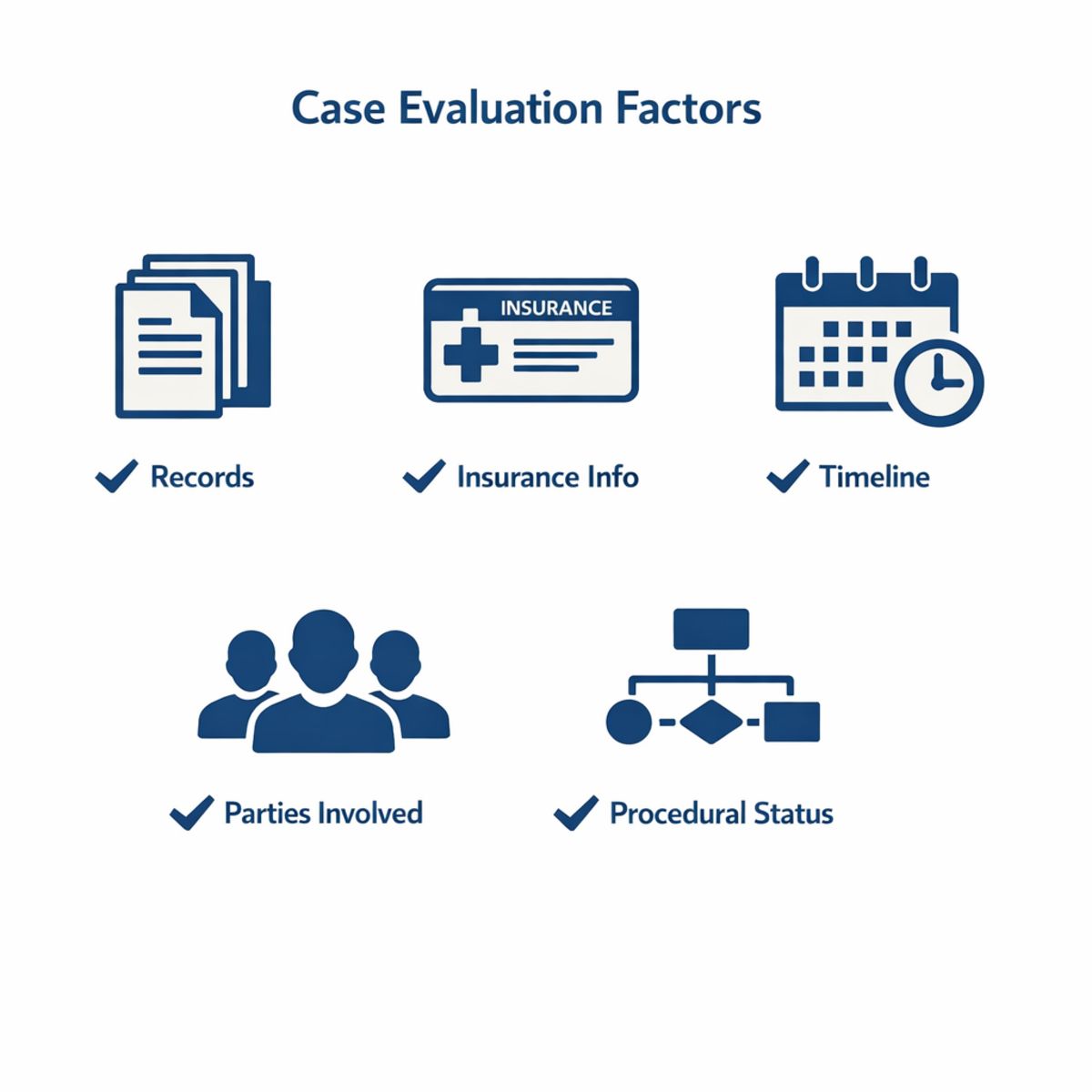
Legal costs and case handling structures can vary from one firm and matter to another, so it is important to avoid broad assumptions. In many situations, an attorney’s initial evaluation depends on the specific facts, the available documentation, and the current posture of the matter rather than any single detail.
What can affect an initial case evaluation
Common considerations may include medical or incident records, insurance-related questions, whether key facts are disputed, the timeline of events, the parties involved, and whether a claim has already entered a formal procedural stage. These issues help shape how a matter is reviewed, but no one factor alone determines the path forward.
For more context on factors when choosing legal representation, readers can explore related guidance. For current intake information, the best next step is to speak directly with the firm.
Evidence Issues and Common Claim Challenges
Motorcycle injury claims often turn on how the available information is gathered, preserved, and interpreted. Common evidence may include scene photos, vehicle damage documentation, witness statements, medical records, repair estimates, and insurance communications. In some situations, people also look at roadway markings, signage, lighting, weather, and other surrounding conditions to better understand what may have happened.
Types of evidence often reviewed
A claim file may contain photographs from the scene, images of damage, treatment records, billing records, and written or recorded statements. These materials are often reviewed together rather than in isolation. General guidance on what to know after a crash can also help people understand why documentation matters.
Why facts may remain disputed
Disputes may arise over visibility, lane position, road conditions, speed estimates, or the sequence of events. Early reports can be incomplete, and later evidence may change the overall picture. Because facts can develop over time, preliminary information should not always be treated as final, especially in broader transportation accident legal matters where multiple sources of evidence are reviewed.
How to Evaluate Motorcycle Accident Attorneys

When researching motorcycle accident attorneys, a neutral checklist can help organize comparisons and keep the focus on practical factors. A useful starting point is whether a firm regularly handles motorcycle collision claims as well as broader vehicle injury matters, since that may shape how it explains documentation, insurance communications, and case steps.
Key criteria to compare
- Experience with motorcycle and other traffic injury case types
- Communication style, including how updates are typically shared
- Transparency about the general case process and likely next steps
- Familiarity with insurance claim records, crash reports, medical documents, and related paperwork
- Clarity about what information the firm may request at the outset
Questions commonly asked during research
Common research questions include how consultations are structured, which records are usually helpful to gather, who the main point of contact may be, and how the firm explains milestones in a claim. Readers comparing firms may also find it helpful to review broader guidance on choosing a personal injury law firm to see how evaluation criteria are framed across injury matters.
This type of checklist is most useful when it helps identify clear communication, organized intake practices, and straightforward explanations, without relying on promises about results.
Frequently Asked Questions About Motorcycle Accident Attorneys
Quick answers to common questions
What does a motorcycle accident attorney do?
A motorcycle accident attorney generally reviews the facts of a crash, explains the legal process, and helps organize a claim. That work may include gathering records, communicating with insurers, evaluating liability issues, and preparing a case for negotiation or litigation if needed.
How is a motorcycle accident claim different from a car accident claim?
Motorcycle claims can involve different injury patterns, visibility disputes, and questions about rider conduct, road conditions, or protective gear. They may also require close review of bias-related assumptions and the specific evidence used to reconstruct how the collision happened.
What kinds of records are commonly reviewed in these cases?
Commonly reviewed materials include crash reports, photographs, witness statements, medical records, billing records, repair estimates, and insurance correspondence. In some matters, attorneys may also examine helmet or motorcycle inspection information, scene evidence, or expert analysis related to causation.
Does every motorcycle accident case go to court?
No. Some claims are resolved through investigation and settlement discussions, while others may involve filing a lawsuit if the parties disagree about fault, damages, or coverage issues. Whether litigation becomes part of the process depends on the facts and the positions taken in the claim.
When can a personal injury attorney become involved after a motorcycle crash?
An attorney can become involved at different stages, including early case review, evidence preservation, or after insurance questions arise. Intake procedures and timing vary by firm, and the appropriate next step depends on the circumstances of the incident and the information available.
Contact the Team for More Information
If you would like more information about motorcycle accident claims or other motor vehicle injury matters, our team can discuss general intake details and the case review process. Reaching out is simply a way to start the conversation and learn about next steps.
A simple next step
You are welcome to contact the firm through our contact page for general information about how the process works. Contacting the firm does not, by itself, create an attorney-client relationship.
Key Takeaways
Motorcycle accident attorneys play a practical, process-focused role by helping evaluate the facts of a crash, organize records and supporting documentation, address insurance-related issues, and guide a claim through the legal process. Their work often centers on keeping information clear, complete, and properly presented at each stage.
Just as importantly, every matter depends on its own facts, records, and documentation. A careful review of the details can shape how a claim is understood and how the next steps are handled.