

After a crash, many people know they should report the accident and get medical care, but they are less certain about what comes next. A personal injury attorney car accident matter usually involves more than filing paperwork. An attorney may help investigate how the collision happened, identify who may be legally responsible, communicate with insurance companies, gather records and other evidence, document medical bills and lost income, and pursue compensation through settlement discussions or, when necessary, litigation.
This article is designed as practical guidance for people researching legal help after a collision. It explains what an attorney typically does, when to speak with one, what evidence can matter, how the process often unfolds, and how fees are commonly structured. The goal is not to make promises, but to help you understand the role legal counsel can play as you evaluate your options.
Why people look for legal help after a crash
People often start looking for legal help when they are dealing with injuries, questions from insurance adjusters, missed time from work, vehicle damage, or uncertainty about fault. In those situations, a calm and organized legal review can help clarify the next steps and the issues that may affect a claim.
What a Personal Injury Attorney for a Car Accident Handles
A personal injury attorney for a car accident is a lawyer who represents an injured person in pursuing compensation after a crash. In this context, car accident attorney, auto accident attorney, and accident lawyer are overlapping terms. Their role goes beyond general insurance help: they assess legal issues, build the claim, protect evidence, and advocate for the client’s interests throughout the process. Readers exploring car accident lawyer legal support options are usually looking for this kind of full legal representation rather than simple claim-status assistance.
Core duties in a car accident claim
An attorney commonly reviews police reports, photographs, medical records, repair estimates, and other documents tied to the collision. They may interview witnesses, help preserve vehicle data or scene evidence, organize proof of lost income and treatment, and communicate with insurance companies on the client’s behalf. A car accident attorney also evaluates damages carefully, including current losses and reasonably documented future impacts, so the claim reflects the full picture rather than only the most immediate bills.
Why legal guidance can matter early
Early legal guidance can help prevent gaps in documentation and reduce avoidable communication mistakes. An auto accident attorney can shape a strategy for presenting facts clearly, preserving time-sensitive evidence, and responding to insurer requests in a way that supports the claim. Many matters resolve through negotiation, but representation may also include filing a lawsuit within applicable deadlines when that step becomes necessary. That does not mean every case goes to trial; it means the accident lawyer is prepared to move the case forward if negotiations do not produce a fair result.

Key Benefits of Hiring a Car Accident Attorney
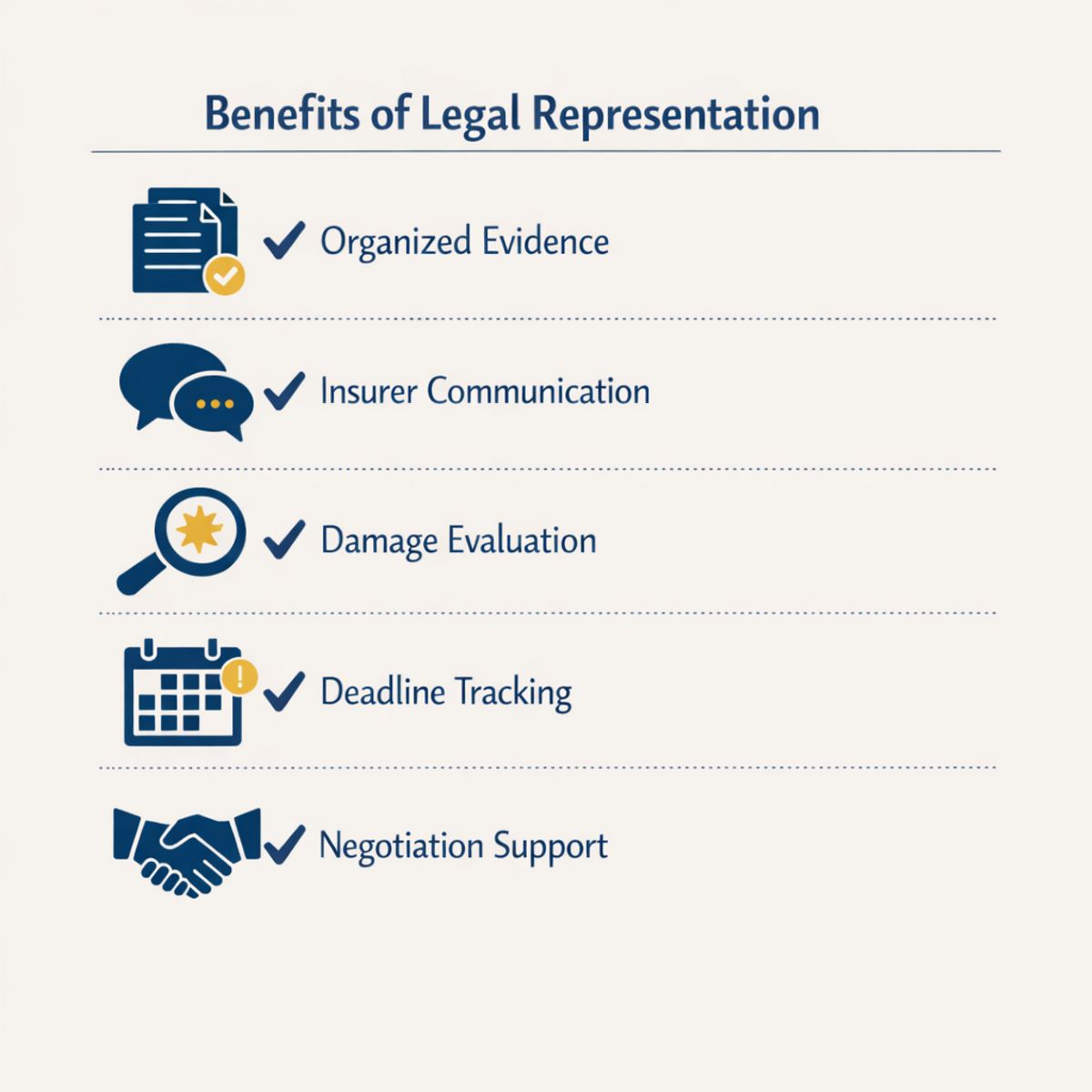
Hiring a car accident attorney can provide practical support during a stressful time, especially when you are trying to recover while also dealing with paperwork, deadlines, and insurance adjusters. One of the main benefits is efficiency. An attorney can help organize records, gather evidence, track communications, and keep the claim moving in a more structured way. That can reduce the burden of handling every detail on your own and help you avoid missing important steps.
A personal injury law firm may also bring clarity to the value of a claim by looking beyond immediate vehicle damage. Depending on the facts, losses may include medical treatment, follow-up care, lost income, reduced earning ability, and pain-related effects on daily life. Careful documentation matters because some impacts are not obvious in the first days after a crash.
Help with insurance communication and negotiation
Insurance companies often request statements, forms, and supporting documents soon after an accident. An attorney can help manage those communications, respond to requests, and present information in a clear and consistent way. This kind of advocacy can be useful if there are disputes about fault, treatment, or the scope of damages. For readers who want to understand costs before hiring counsel, it may help to review how contingency fees work after crashes.
Building a more complete picture of damages
Another benefit of legal representation is developing a fuller picture of the claim. A car accident attorney may work to connect medical records, wage information, repair estimates, and other evidence so the claim reflects the broader effect of the crash. In more complex cases, a personal injury law firm may also coordinate with specialists or experts when additional analysis is needed. This support can help people make informed decisions about how to proceed without assuming any guaranteed result.
How to Choose the Best Attorney for Car Accidents
Choosing the best attorney for car accidents usually comes down to fit, experience, and clarity. A strong choice is not necessarily the lawyer with the biggest ads, but the one who regularly handles vehicle collision claims, explains the process clearly, and gives you confidence about what happens next. Use the steps below to compare options in a practical, organized way during your search.
Step 1: Look for relevant accident case experience
Start by asking whether the attorney regularly handles car accident cases similar to yours. Relevant experience can matter more than broad legal marketing because crash claims often involve insurance investigations, medical records, liability disputes, and settlement negotiations. During a consultation, ask questions like: How often do you handle car accident claims? Have you worked on cases involving disputed fault or significant injuries? What is your approach to investigating the crash and negotiating with insurers?
Step 2: Ask how communication and case updates work
Clear communication is one of the easiest ways to assess whether an attorney is a good fit. Ask who will handle your case day to day, whether you will work directly with the attorney or a team member, and how often updates are typically provided. You can also ask how quickly calls or emails are usually returned. The best attorney for car accidents is often someone who sets realistic expectations and explains the process in a way you understand.
Step 3: Understand fees and case costs
Before signing anything, make sure you understand how fees work and what case-related costs may arise. Ask whether the representation is based on a contingency fee, what percentage may apply, and how expenses such as records, filings, or expert reviews are handled. Simple, direct questions can help: What will I owe if the case does not resolve successfully? Are costs deducted before or after fees? A good consultation should leave you with a clear picture of both the legal process and the financial terms.
As you compare attorneys, focus on whether they have relevant experience, a transparent communication process, and an approach to investigation and negotiation that makes sense to you. That combination is often the best indicator of a strong match.
What the Car Accident Claim Process Usually Looks Like
Most car accident claims follow a similar sequence, even though no two cases move at exactly the same pace. A typical process begins with an initial consultation, where an attorney reviews what happened, discusses injuries, and explains possible next steps. Many people seeking car accident claim help from attorneys want a clearer picture of what comes next and what information matters most.
After that, the claim usually moves into investigation and documentation. This stage can include reviewing the crash report, gathering photos, identifying witnesses, collecting insurance details, and preserving other evidence tied to fault and damages. Medical records and treatment updates are also important, because they help show how the injuries affected daily life, work, and recovery.
Investigation and evidence gathering
An attorney often works to assemble the records needed to support the claim in plain, organized form. That may include scene photos, repair information, witness statements, medical documentation, billing records, and communication with insurers. The goal is to build a clear picture of liability and losses before pushing for resolution.
Negotiation and possible litigation
Once treatment progress and damages are better understood, a demand may be sent and negotiations can begin. Many claims resolve through settlement discussions, but some move into litigation if liability is disputed, injuries are serious, or the insurer does not offer fair compensation. Timelines vary based on treatment length, the full impact of losses, and how the insurance company responds. For that reason, injury attorneys often advise clients not to rush a settlement before the case value is reasonably understood.

When to Hire an Accident Lawyer vs. Handle a Claim Alone

Some accident claims are manageable without legal help, while others benefit from support from an accident lawyer. A practical way to decide is to look at how complicated the facts, injuries, and insurance issues are.
Simple claims compared with more complex injury cases
If the crash involved mainly vehicle damage, the facts are clear, fault is accepted, and your losses are easy to document, handling the claim on your own may be realistic. In those situations, the process is often more straightforward and focused on repair costs, rental expenses, and related paperwork.
Hiring an accident lawyer may be more useful when injuries are involved, treatment is ongoing, fault is disputed, or more than one party may share responsibility. The same is true for crashes involving commercial vehicles or situations where the insurer questions what caused the injuries or how serious the damages are.
The choice does not have to be based on fear or pressure. It is usually about whether the claim is simple and well-defined or whether it involves legal, medical, or insurance issues that are harder to sort through alone. For a related example, see reasons to hire a pedestrian lawyer.
How Car Accident Attorney Fees Are Typically Structured
Many car accident attorneys are paid on a contingency fee basis, which generally means the fee is tied to a recovery instead of upfront hourly billing. In practical terms, that can reduce the need to pay legal fees at the start of a case, but fee structures and case costs can still vary by firm and by matter. If you want to learn about car accident lawyer representation, it is wise to review the firm’s process carefully before moving forward.
Because details differ, it helps to ask clear questions about how fees are calculated, what case expenses may apply, and what happens if no recovery is obtained. A consultation is often the right time to get those answers in plain language and make sure you understand the agreement before signing anything.
Questions to ask about fees
- Is the fee based on a contingency arrangement?
- How are case costs and expenses handled?
- When are fees and costs paid?
- What happens if there is no recovery?
- Will the fee agreement be provided in writing?
Frequently Asked Questions
When should I contact a personal injury attorney after a car accident?
It is often helpful to contact an attorney as early as possible, especially if you were injured, fault is disputed, or an insurer is already asking for statements. Early guidance can help preserve evidence and reduce communication mistakes.
What evidence should I keep after a car accident?
Keep photos of the scene and vehicles, the police report, medical records, repair estimates, witness names and contact details, receipts for related expenses, and all emails or letters from insurance companies.
Do all car accident cases go to court?
No. Many car accident claims are resolved through negotiation or settlement without a trial. Some cases move into litigation when there are disagreements about fault, injuries, coverage, or the value of damages.
How do I know if I need an auto accident attorney?
A legal consultation may be worth considering if you have injuries, significant financial losses, disputed liability, multiple parties involved, or trouble getting fair responses from insurers. An attorney can help you understand options before you decide how to proceed.
When It May Be Time to Contact the Team
If your claim involves ongoing medical treatment, disputed liability, unclear fault, or multiple vehicles, getting legal guidance may help you better understand your options. The same may be true if an insurer is delaying, denying, or minimizing your claim. In more complicated situations, a case review can provide clarity about what steps to take next and what information may matter most.
Situations that may justify a consultation
Speaking with the team can be a practical next step when the facts are hard to sort out or the process feels overwhelming. If you want to discuss a car accident claim and get straightforward guidance based on your situation, you can reach out through the contact page.
Final Takeaway
A personal injury attorney car accident case often comes down to careful evidence gathering, clear communication with insurers, accurate evaluation of damages, and steady guidance through each step of the claims process. The right time to seek legal help depends on how complex the accident is, how serious the losses are, and how much uncertainty surrounds liability or compensation.
A clear path forward after a crash
In the end, understanding the process, keeping documentation organized, and knowing when legal support may be useful can help you make informed decisions with more clarity and confidence after a crash.