

In the days after a collision, many details may still be developing. Police reports can be preliminary, medical symptoms may change, and insurance questions often come up before fault or losses are fully understood. That is one reason people in Irvine often begin looking into whether speaking with a personal injury lawyer after a car accident could be useful, especially when injuries, missed work, or ongoing claim issues start affecting daily life. This article provides general California information only, not advice for any specific situation.
A steady review of the basics can help clarify what to watch for in the early stages. Below, the article explains common signs legal help may be worth considering, how the process generally works, when timing may matter, and answers to frequently asked questions. The goal is to make the topic easier to understand while recognizing that each crash involves its own facts, records, and timeline.
Why timing often matters after a collision
After a crash, documentation often begins to build quickly. Medical records, repair estimates, witness information, and insurance communications may all develop over a short period of time. Because those materials can shape how a claim is understood later, early organization and careful review are often important parts of evaluating whether legal help may be useful.
What a Personal Injury Lawyer Does in a Car Accident Matter
In a California car accident claim, a personal injury lawyer helps evaluate the legal side of the case and manage claim-related tasks. That can include reviewing crash reports, medical records, photographs, repair information, wage loss documents, and insurance correspondence. A lawyer may also communicate with insurers, organize supporting documentation, assess liability and damages issues under California law, and watch for filing deadlines. For readers looking for Irvine car accident lawyer legal guidance, the role is generally about legal representation and claim handling rather than medical care or accident investigation.
Core tasks in a California injury claim
A personal injury attorney car accident matter may involve several practical steps. Common tasks include reviewing available records, preserving evidence, identifying missing documents, and handling communications with insurance adjusters. A lawyer may also help frame the issues in the claim, such as who may be legally responsible, what losses are being documented, and whether additional facts need to be clarified before a demand or response is prepared.
This role is different from the work of doctors, who provide treatment; police, who document and investigate the incident; and insurance adjusters, who evaluate the claim from the insurer’s perspective. Legal representation can also include spotting related issues that may affect the claim, such as rideshare involvement, multiple vehicles, or questions about coverage.
Why local context can matter in Irvine
In Irvine, local context can shape how a claim is documented and organized. Road layouts, traffic patterns, the location of witnesses, and where records are kept can all affect how information is gathered. Insurer communications and repair or medical documentation may also come from several sources, so keeping the file organized can be an important part of the process.
In short, a personal injury lawyer’s job in a car accident matter is to handle legal and claim-related work, evaluate issues under California law, and help present the facts in a clear, documented way.
Common Situations Where Legal Help May Be Worth Considering
Not every crash leads someone to call a lawyer, but some situations become more complicated than they first appear. If you are trying to understand whether speaking with a car accident attorney makes sense, it can help to look at the practical issues involved rather than assume every case is the same.
When injuries or treatment become more involved
Legal help may be worth considering when medical care is ongoing, follow-up appointments continue, or it becomes difficult to keep track of records, bills, and time away from work. A consultation can sometimes help clarify what documents to preserve while recovery is still in progress. Readers who want more background on when to hire a personal injury attorney may find that topic useful at this stage.
When several parties or insurers are involved
Claims can also become more layered when more than one driver, insurer, or business is connected to the collision. This may happen in multi-vehicle crashes, employer-related driving situations, commercial vehicle incidents, or rideshare collisions. In those circumstances, a california car accident lawyer or even an uber accident lawyer may be consulted simply to help sort out process, reporting, and communication issues tied to motor vehicle accident legal matters.
When the facts are still being sorted out
Another common reason people seek guidance is when fault is unclear, witness accounts differ, uninsured issues arise, or the police report and insurer positions do not fully align. Early crash information is often preliminary, and investigations can change the picture over time. In those moments, legal guidance may help a person understand next steps and documentation needs without assuming any particular outcome.
How the Car Accident Claims Process Generally Works in California
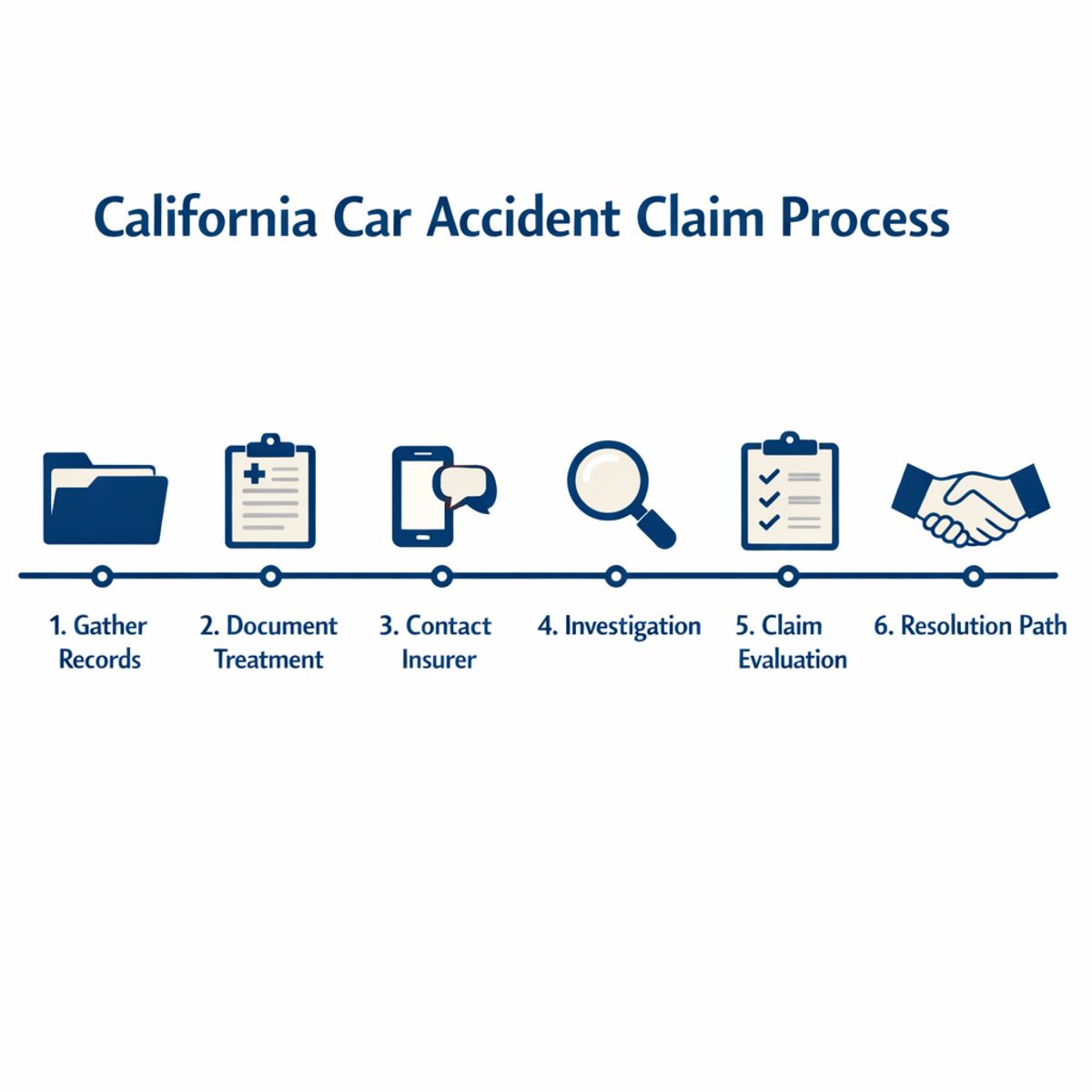
In California, a car accident claim often moves through a series of fact-gathering and review stages rather than one single event. While each matter can vary, the general process usually begins with collecting records, continues through medical and insurance documentation, and may end in negotiated resolution or, when appropriate under the facts, litigation. For readers looking to understand how an Irvine car accident lawyer helps, the sequence below offers a practical overview.
Step 1: Gather and preserve basic records
The process commonly starts with assembling the core documents tied to the incident. This may include collision reports, scene photographs, repair estimates, towing records, witness information, and written correspondence. These materials help create a clearer timeline of what was reported and when.
Step 2: Track treatment and related impacts
Medical records and expense documentation often become an important part of claim review. Files may include visit summaries, invoices, prescription records, and notes reflecting work interruptions or other day-to-day effects. Keeping these records organized can help show how the event and its aftermath were documented over time.
Step 3: Review legal and insurance issues
At this stage, insurers and representatives may examine policy details, identify involved parties, and evaluate liability-related questions. Communications about the claim, recorded statements, and coverage issues may all be reviewed as part of the broader file.
Step 4: Investigation and evidence review
Once the claim is opened, the available evidence is often compared and analyzed. That can include photographs, repair information, medical documentation, and statements already provided. The purpose is to assess what the records show and whether additional information is needed.
Step 5: Evaluation of damages and legal issues
After the record is more complete, the claim may be evaluated for documented losses and disputed issues. This can involve reviewing economic impacts, the nature of the claimed harm, and any legal questions that affect how the matter is analyzed.
Step 6: Negotiation or litigation if appropriate under the facts
Some claims resolve through negotiation after the evidence and positions are reviewed. Others may require formal legal action when the facts, disputes, or claim posture make that path necessary. In either situation, the process generally depends on documentation, investigation status, and the issues raised in the claim.
Timing, Evidence, and Deadlines After a Car Accident
Timing can matter after a crash for both practical and legal reasons. In general, the longer an issue sits, the harder it may become to gather clear information. Photos can be lost, repair work can change the condition of a vehicle, and witness recollections may become less precise with time. Even routine records, such as towing details, medical paperwork, or incident reports, can take more effort to organize if they are not collected early.
That does not mean every situation follows the same timeline, but early documentation often makes it easier to understand what happened. For readers looking for broader Irvine car accident claim information page resources, it can help to start with a clear overview and then keep records in one place. A personal injury attorney irvine residents consult may also discuss the importance of preserving information in a general educational context.
Why evidence often becomes harder to sort out later
Over time, details can blur. A roadway may look different, weather conditions may be forgotten, and vehicle damage may no longer appear the same after storage or repairs. If records are incomplete at the start, filling in gaps later can be more difficult. Prompt information gathering in a calm, organized way can help preserve a more accurate picture.
General deadline awareness under California law
California matters can involve deadlines and procedural requirements, but those time limits may vary depending on the facts, the parties involved, and the type of claim. Because delay can affect both documentation and deadline awareness, it is generally wise to stay attentive and informed without assuming the same rule applies in every situation.
Comparing Legal Help Options After a Car Accident
After a car accident, the right level of legal help often depends on how complex the claim becomes. In some lower-complexity situations, the issues may center mainly on vehicle damage, clear documentation, and communication with a single insurer. In others, the claim may involve injuries, disputed fault, multiple vehicles, or more than one insurance company, which can increase the need for organized records and closer review of legal and insurance questions.
Simpler claims versus more complex injury claims
A more straightforward matter may involve repair estimates, photos, a police report, and a relatively clear timeline of events. By contrast, injury-related claims can raise additional questions about medical records, ongoing treatment, causation, and how different insurers evaluate the same facts. Cases with conflicting statements or unclear responsibility may also require more detailed documentation and analysis.
It is not always a matter of one path being better than another. The key difference is usually claim complexity. Related case types can also bring different considerations, such as truck accident lawyer claim issues or motorcycle accident lawyer legal considerations, where facts, coverage questions, or injury patterns may differ.

Frequently Asked Questions
When do people usually contact a personal injury lawyer after a car accident?
Many people reach out when injuries appear more serious, insurance questions become complicated, or they are unsure what records to gather. Timing depends on the situation, but early questions often involve documentation, communication, and claim steps under California law.
What does a car accident attorney do during a claim?
A car accident attorney may review records, help organize claim information, communicate with insurers, and evaluate legal issues that affect the case. The exact role varies, but the work is generally focused on facts, paperwork, and claim-related procedures.
Can a personal injury lawyer help with an Uber accident case?
Rideshare cases can involve additional questions about which insurance policies apply and which parties may be involved. A lawyer can help assess those issues in general, especially when the crash involves an Uber driver, passenger, or another vehicle.
Does it matter if the crash happened in Irvine?
Yes, local details can affect practical issues like where reports, photos, witnesses, and roadway information come from. Broader claim rules are still generally governed by California law, but the Irvine location may shape how facts are gathered and reviewed.
When It May Be Time to Contact the Team
Legal questions often come up when injuries, insurance issues, or unclear facts make a car accident matter harder to sort through. If you want to discuss your situation in general terms and better understand the process, reaching out may be a practical next step.
A practical next step
You can review the details of your circumstances and decide whether speaking with the firm makes sense for you. If you would like to take that step, Contact the team.
Key Takeaways
After an Irvine car accident, a personal injury lawyer may become more relevant when a claim involves injuries, disputed facts, multiple parties, or concerns about timing and documentation. Early details can still be preliminary, so it is often important to rely on records, investigation, and updated information as a claim develops.
California claims can vary based on the specific facts, available evidence, and the quality of the documentation. In general, timing, records, and claim complexity often shape whether legal guidance may be useful.