
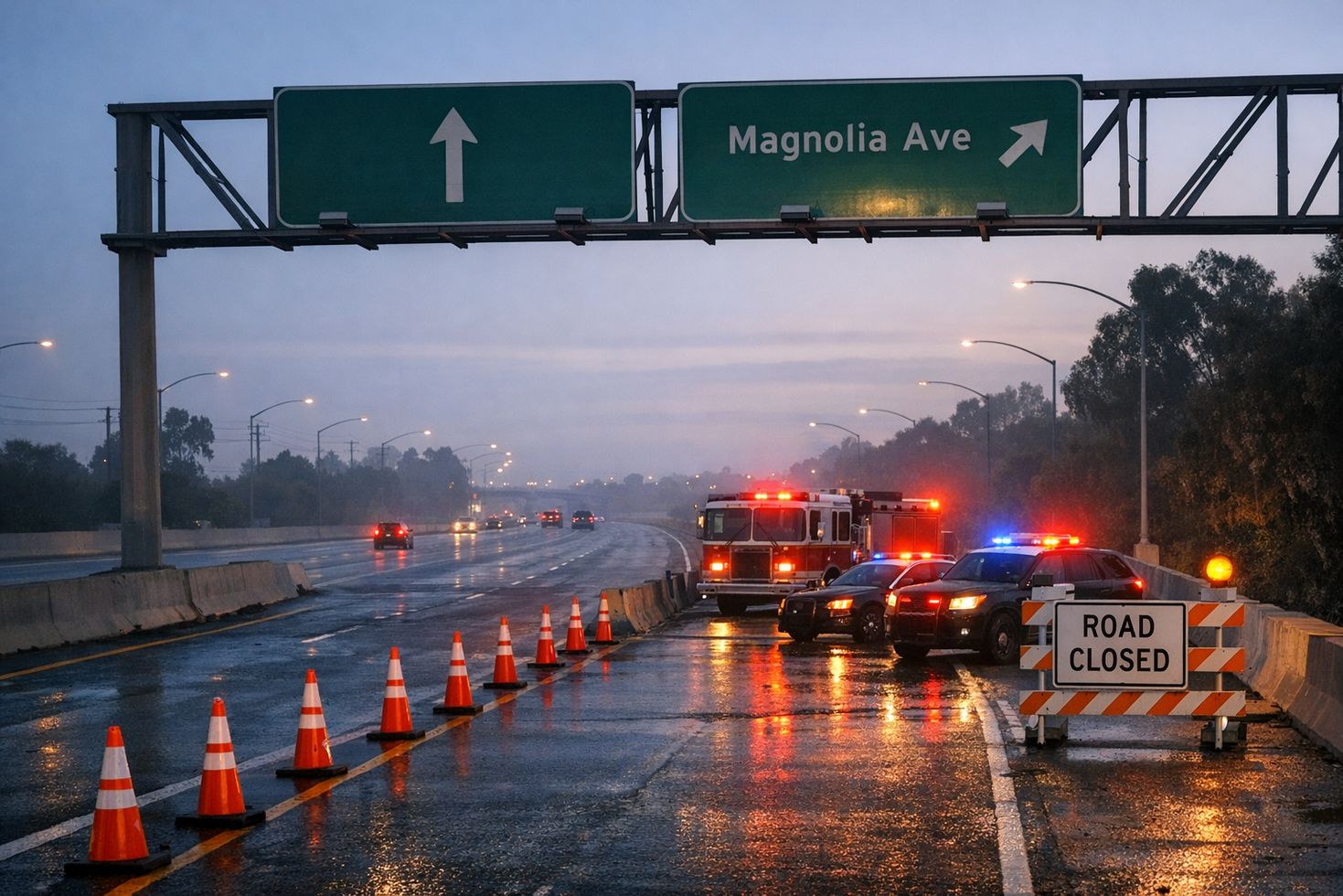
As reported by California Highway Patrol incident log
Date: November 16, 2026, 4:21 a.m.
Location: I-5 northbound at Magnolia Avenue off-ramp, Anaheim, Orange
Type: Car Accident
According to California Highway Patrol incident logs, a traffic collision with an ambulance requested was reported early Monday on the northbound Interstate 5 at Magnolia Avenue in Orange County.
The computer-aided dispatch log shows the incident was recorded at 4:21 a.m. on November 16, 2026, with the final incident type listed as a traffic collision, ambulance requested, using code 1179. The location was identified as the northbound I-5 off-ramp at Magnolia Avenue.
A log entry at 4:22 a.m. noted a vehicle blocking the off-ramp. By 4:28 a.m., another entry stated that two vehicles were stopped on the off-ramp. A subsequent 4:56 a.m. entry described a non-injury collision, coded 1182, blocking the left lane of the off-ramp.
The log does not specify the extent of any injuries, only that an ambulance was requested. The dispatch information does not list specific responding agencies beyond the California Highway Patrol, and no further details on the number of people involved or the cause of the collision were included.
Source
California Highway Patrol incident log · original report
This summary was prepared from that report and is not a reproduction of it.
What California law says after a car accident
Reporting requirements after a California collision
California imposes reporting duties on drivers that are separate from any insurance claim.
A report must be filed with the DMV on form SR-1 within ten days of a collision that caused any injury, any death, or more than one thousand dollars in property damage to any one person. This duty applies regardless of fault, applies even when police responded and wrote their own report, and is not satisfied by notifying an insurance company. With current repair costs, most collisions that involve a body shop meet the damage threshold.
A separate rule covers collisions causing injury or death. The driver must make a written report to the California Highway Patrol, or to the city police department where the collision happened in a city, within twenty four hours. The statute states this duty for every injury or fatal collision. In practice, where officers responded and completed a report at the scene, that report generally satisfies the agency’s need, but a driver who assumes this without confirming it is relying on practice rather than on the text of the law.
Missing the DMV deadline can lead to suspension of driving privileges, an outcome unrelated to who caused the collision.
California filing deadlines for injury and death claims
In California, a lawsuit for personal injury caused by another person’s negligence generally must be filed within two years of the injury, under Code of Civil Procedure section 335.1. A claim for a death caused by another’s wrongful act or neglect runs under the same two-year period.
Shorter deadlines apply in specific situations. If a city, county or state agency may be responsible, a written claim must normally be presented to that public entity within six months. Claims involving minors, injuries that are not discovered right away, and certain defendants can follow different timelines.
Which deadline applies depends on the facts of each situation, and the standard two-year period does not govern every claim.
Your Rights After a Car Accident in California
A collision like this one raises questions about fault, insurance and medical costs, usually before anyone has had time to think about them. These guides explain how California handles them.
- Los Angeles car accident lawyer: fault, insurance offers, and what a claim is worth
- Brain and spinal cord injury lawyer: for collisions causing serious or lasting injury
- All practice areas
If you were hurt in a collision, The Law Offices of Burg and Brock, Inc. can explain your options.
Published by The Law Offices of Burg and Brock editorial team. The incident summary was drafted with AI assistance from the cited report. Editorial and legal disclaimer.
This website is for informational purposes only and does not provide legal advice. Using this site does not form an attorney/client relationship. This site is legal advertising.
This article is general information, not legal advice.