
Authorities reported a July 27 crash on McWade Avenue involving a motorcycle, an SUV and a minivan; injury details were not available.
Accident News Report
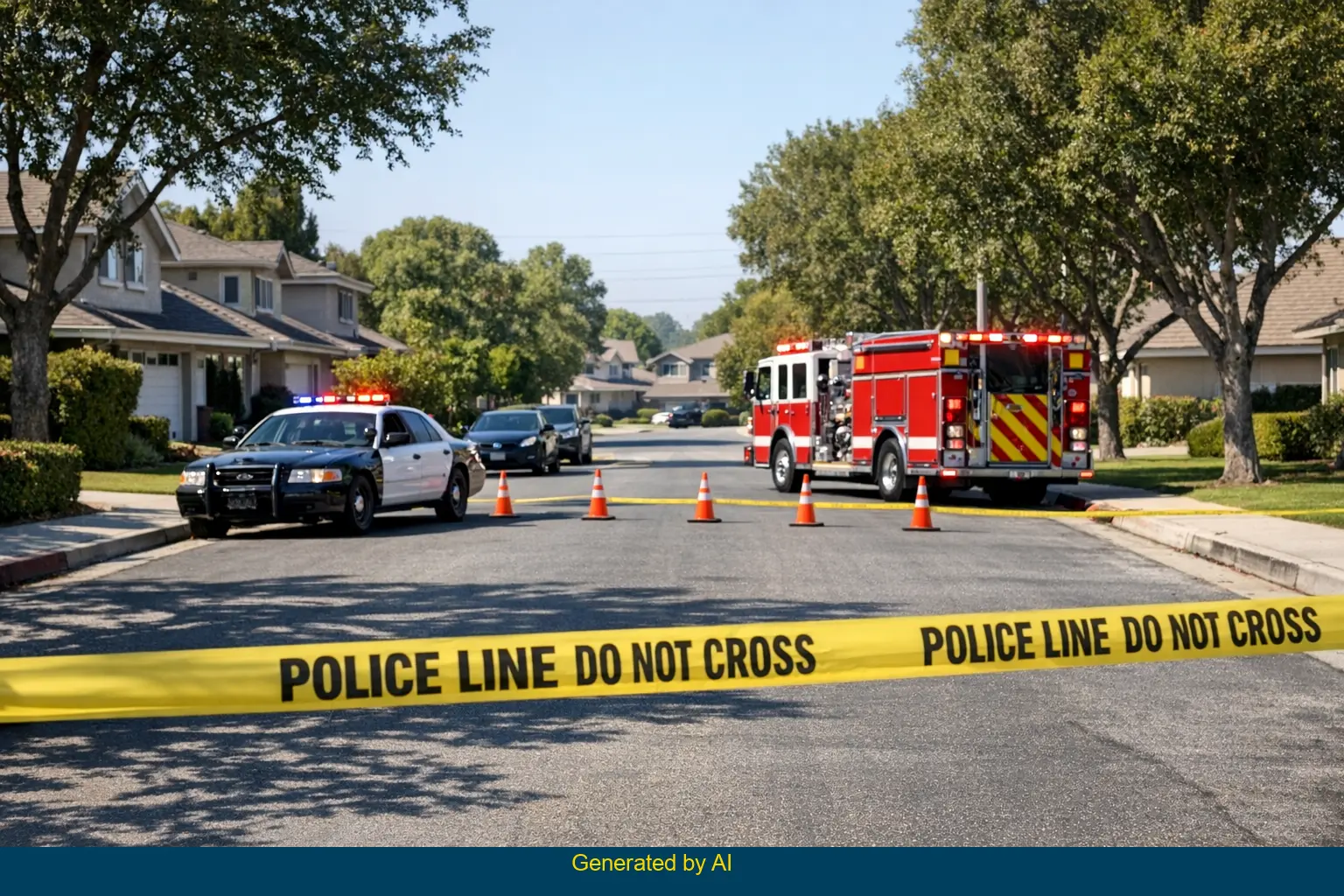
On July 27, 2026, a collision involving a silver Dodge SUV and a motorcycle was reported on McWade Avenue. Initial logs at about 4:22 p.m. described the incident as a crash between the SUV and the motorcycle. A short time later, the incident was also noted as involving a motorcycle and a minivan, authorities said. Officials reported that a handgun was found at the scene, but its owner was unknown. Fire personnel indicated there was no immediate safety concern related to the weapon. A flatbed tow truck was requested for the motorcycle around 5:01 p.m., and a towing company was notified. Further log entries were recorded as the response continued. Information about injuries or fatalities was not included in the available reports.
Incident Details
What California law says after a motorcycle accident
Motorcycle collisions and California law
California expressly recognizes lane splitting, the practice of a motorcycle riding between rows of stopped or slow moving vehicles travelling in the same direction, in Vehicle Code section 21658.1. A rider who was lane splitting is not automatically at fault for a resulting collision. As in any collision, the question is what each party actually did and whether it was reasonable under the conditions.
California sets no legal speed limit and no speed differential for lane splitting. Figures that circulate widely, such as riding no more than ten miles per hour faster than surrounding traffic, come from a safety guidance document that was withdrawn more than a decade ago and were never part of the law. The California Highway Patrol publishes safety tips rather than numeric rules, and riding on the shoulder is not lane splitting and is not lawful.
California also requires every motorcycle rider and passenger to wear a helmet meeting federal safety standards, and the helmet must be properly fastened and correctly sized.
Motorcycle cases carry a practical difficulty that does not appear in other collisions. Riders frequently face an assumption that they were speeding, weaving, or riding recklessly, regardless of what the evidence shows. That assumption can appear in early reporting, in an insurer’s evaluation, and later in a jury’s thinking. Physical evidence, scene measurements, and independent witnesses often matter more in these cases than in a routine collision.
Reporting requirements after a California collision
California imposes reporting duties on drivers that are separate from any insurance claim.
A report must be filed with the DMV on form SR-1 within ten days of a collision that caused any injury, any death, or more than one thousand dollars in property damage to any one person. This duty applies regardless of fault, applies even when police responded and wrote their own report, and is not satisfied by notifying an insurance company. With current repair costs, most collisions that involve a body shop meet the damage threshold.
A separate rule covers collisions causing injury or death. The driver must make a written report to the California Highway Patrol, or to the city police department where the collision happened in a city, within twenty four hours. The statute states this duty for every injury or fatal collision. In practice, where officers responded and completed a report at the scene, that report generally satisfies the agency’s need, but a driver who assumes this without confirming it is relying on practice rather than on the text of the law.
Missing the DMV deadline can lead to suspension of driving privileges, an outcome unrelated to who caused the collision.
Your Rights After a California Motorcycle Accident
Motorcycle riders are often blamed for crashes they did not cause, and the injuries tend to be severe. These guides explain how fault is established in California and what a claim may cover.
- California motorcycle accident lawyer: lane splitting, fault, and what a claim is worth
- Brain and spinal cord injury lawyer: the injuries most common in motorcycle collisions
- All practice areas
Your Rights After a Motorcycle Accident in California
A collision like this one raises questions about fault, insurance and medical costs, usually before anyone has had time to think about them. These guides explain how California handles them.
- California motorcycle accident lawyer: lane splitting, fault, and what a claim is worth
- Brain and spinal cord injury lawyer: the injuries most common in motorcycle collisions
- All practice areas
Injured in This Accident? Get Trusted Legal Guidance
After an accident, the right information can make a meaningful difference. If you or a loved one was hurt, The Law Offices of Burg and Brock, Inc. can help you understand your rights and options.
Speak with our legal team today before making important decisions.