
As reported by California Highway Patrol incident log
Date: September 23, 2026, 3:33 a.m.
Location: Interstate 10 eastbound east of Desert Center, mile marker 106, Desert Center, Riverside
Type: Truck Accident
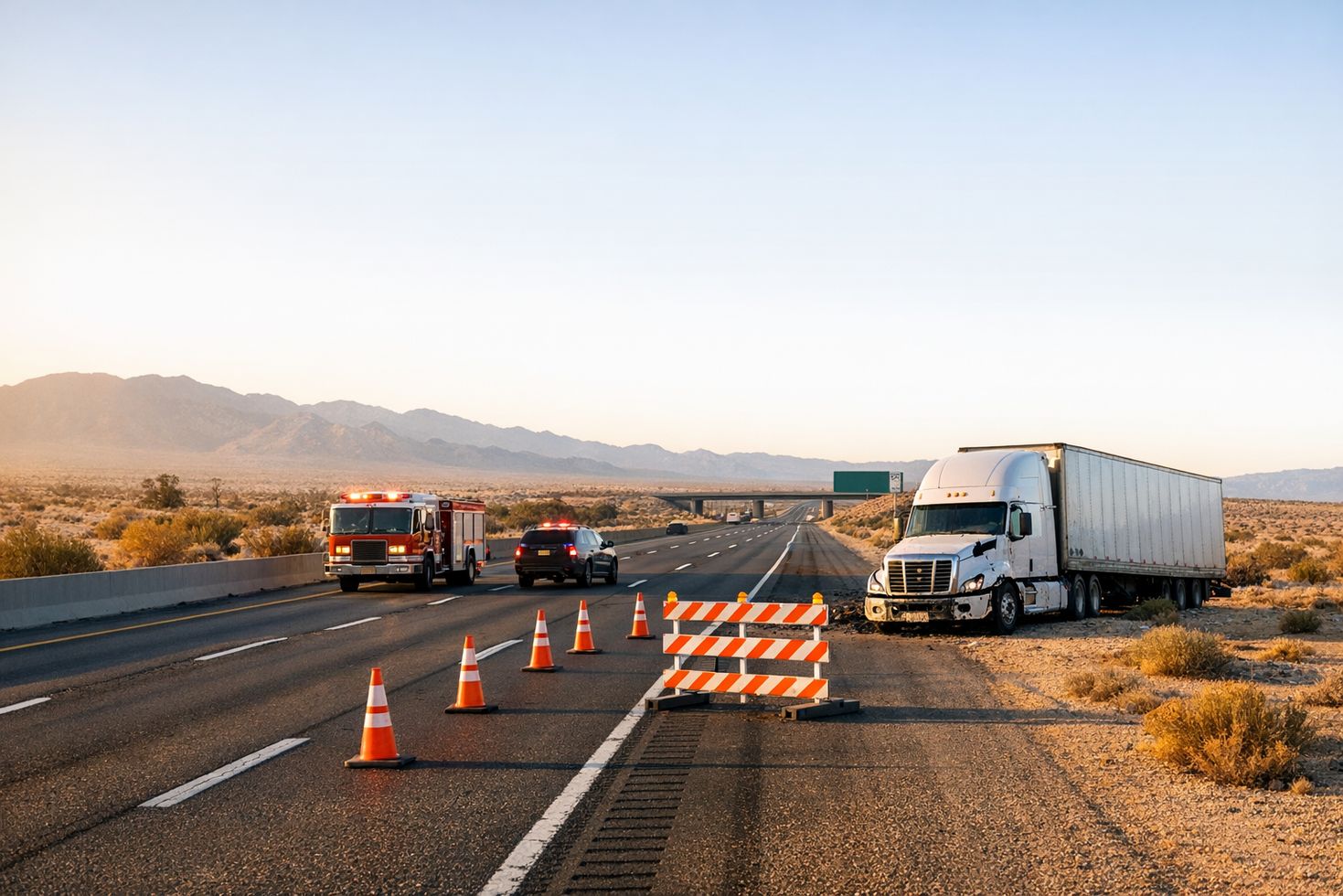
According to California Highway Patrol incident logs, a traffic collision involving two big rigs was reported on eastbound Interstate 10 near Desert Center around 3:33 a.m. Wednesday, September 23, 2026.
Dispatcher notes stated that one semi truck overturned in the traffic lanes and that a second report indicated a big rig struck a parked big rig and overturned. The incident was initially logged as a crash with an ambulance requested and later coded as a minor injury collision involving two vehicles, with one person transported, according to the log.
Log entries said both eastbound lanes were blocked and that crews requested Caltrans for a hard closure with traffic diverted to State Route 177. The log also noted diesel fuel spilled between the vehicles and reported guardrail damage on both sides of the eastbound lanes. According to the entries, CAL FIRE and an ambulance responded but were delayed in traffic. By about 8:30 a.m., the log indicated eastbound and westbound lanes were reopened and a later entry reported all lanes clear after vehicle recovery.
Source
California Highway Patrol incident log · original report
This summary was prepared from that report and is not a reproduction of it.
What California law says after a truck accident
Why commercial vehicle cases are different
A collision involving a commercial truck or bus is not simply a larger car collision. Commercial carriers operate under federal and state safety regulations covering driver hours of service, vehicle inspection and maintenance, driver qualification, and cargo securement. A violation of those rules can bear directly on how the collision happened.
These cases also involve records that do not exist in an ordinary collision: electronic logging device data, engine control module data, maintenance and inspection files, driver qualification files, dispatch records, and in many vehicles onboard camera footage. Federal rules require carriers to keep much of this material only for a limited time. Driver vehicle inspection reports must be retained for three months, records of duty status and the supporting documents behind them for six months, and annual inspection reports for fourteen months. The logging device on the truck itself typically holds only the current day and the previous seven days.
Other material that often matters most, including engine control module data, onboard camera video, and raw location data, carries no federal retention period at all and is overwritten on the carrier’s own cycle.
For that reason, requests to preserve evidence are often sent to the carrier and its insurer early. Responsibility may also extend beyond the driver to the motor carrier, a maintenance contractor, or whoever loaded the cargo.
Reporting requirements after a California collision
California imposes reporting duties on drivers that are separate from any insurance claim.
A report must be filed with the DMV on form SR-1 within ten days of a collision that caused any injury, any death, or more than one thousand dollars in property damage to any one person. This duty applies regardless of fault, applies even when police responded and wrote their own report, and is not satisfied by notifying an insurance company. With current repair costs, most collisions that involve a body shop meet the damage threshold.
A separate rule covers collisions causing injury or death. The driver must make a written report to the California Highway Patrol, or to the city police department where the collision happened in a city, within twenty four hours. The statute states this duty for every injury or fatal collision. In practice, where officers responded and completed a report at the scene, that report generally satisfies the agency’s need, but a driver who assumes this without confirming it is relying on practice rather than on the text of the law.
Missing the DMV deadline can lead to suspension of driving privileges, an outcome unrelated to who caused the collision.
Your Rights After a Truck Accident in California
A collision like this one raises questions about fault, insurance and medical costs, usually before anyone has had time to think about them. These guides explain how California handles them.
- Los Angeles truck accident lawyer: how claims against trucking companies and their insurers actually work
- Brain and spinal cord injury lawyer: for collisions causing serious or lasting injury
- All practice areas
If you were hurt in a collision, The Law Offices of Burg and Brock, Inc. can explain your options.
Published by The Law Offices of Burg and Brock editorial team. The incident summary was drafted with AI assistance from the cited report. Editorial and legal disclaimer.
This website is for informational purposes only and does not provide legal advice. Using this site does not form an attorney/client relationship. This site is legal advertising.
This article is general information, not legal advice.